Description
🧾 Custom-made Sisustuslasi
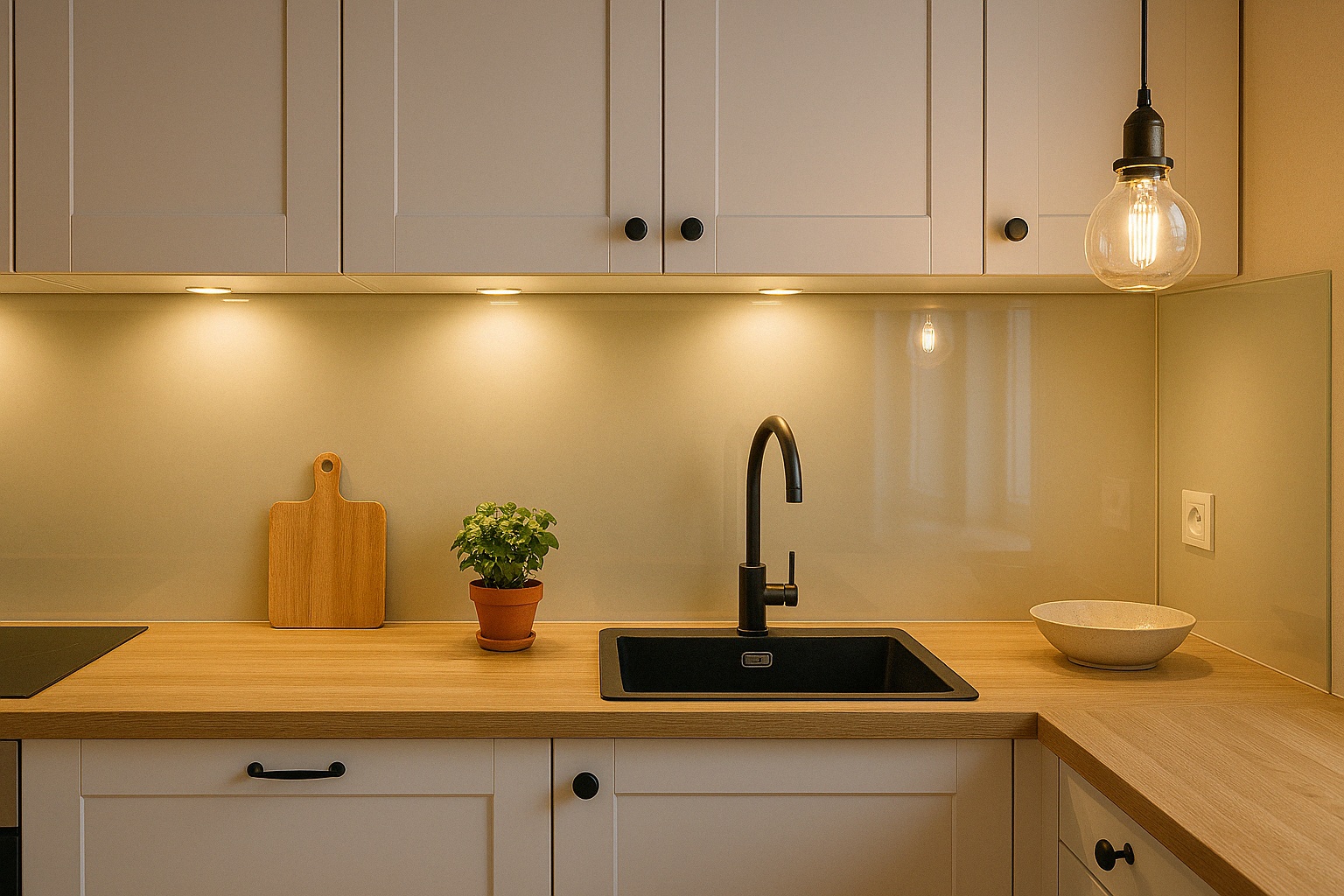
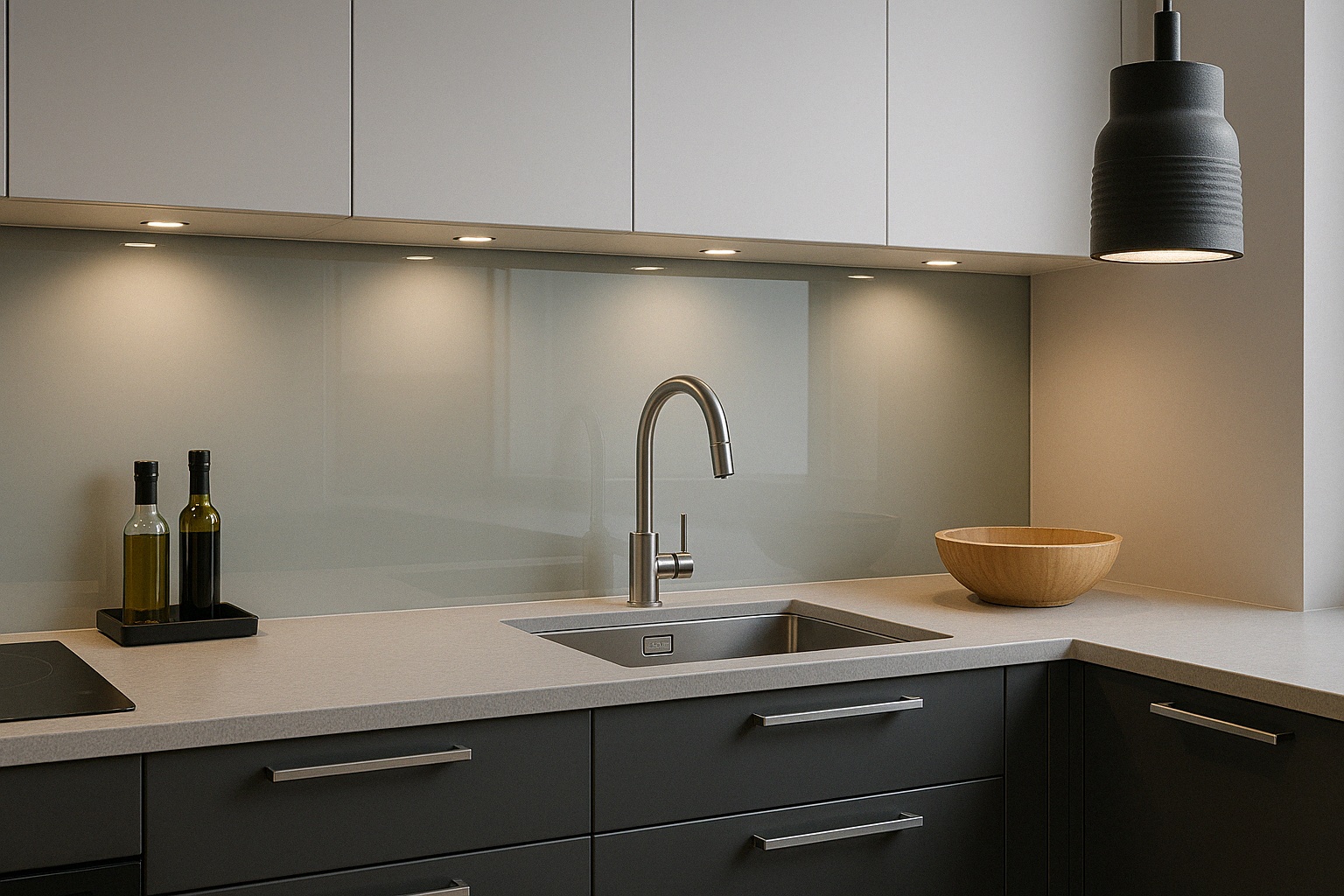
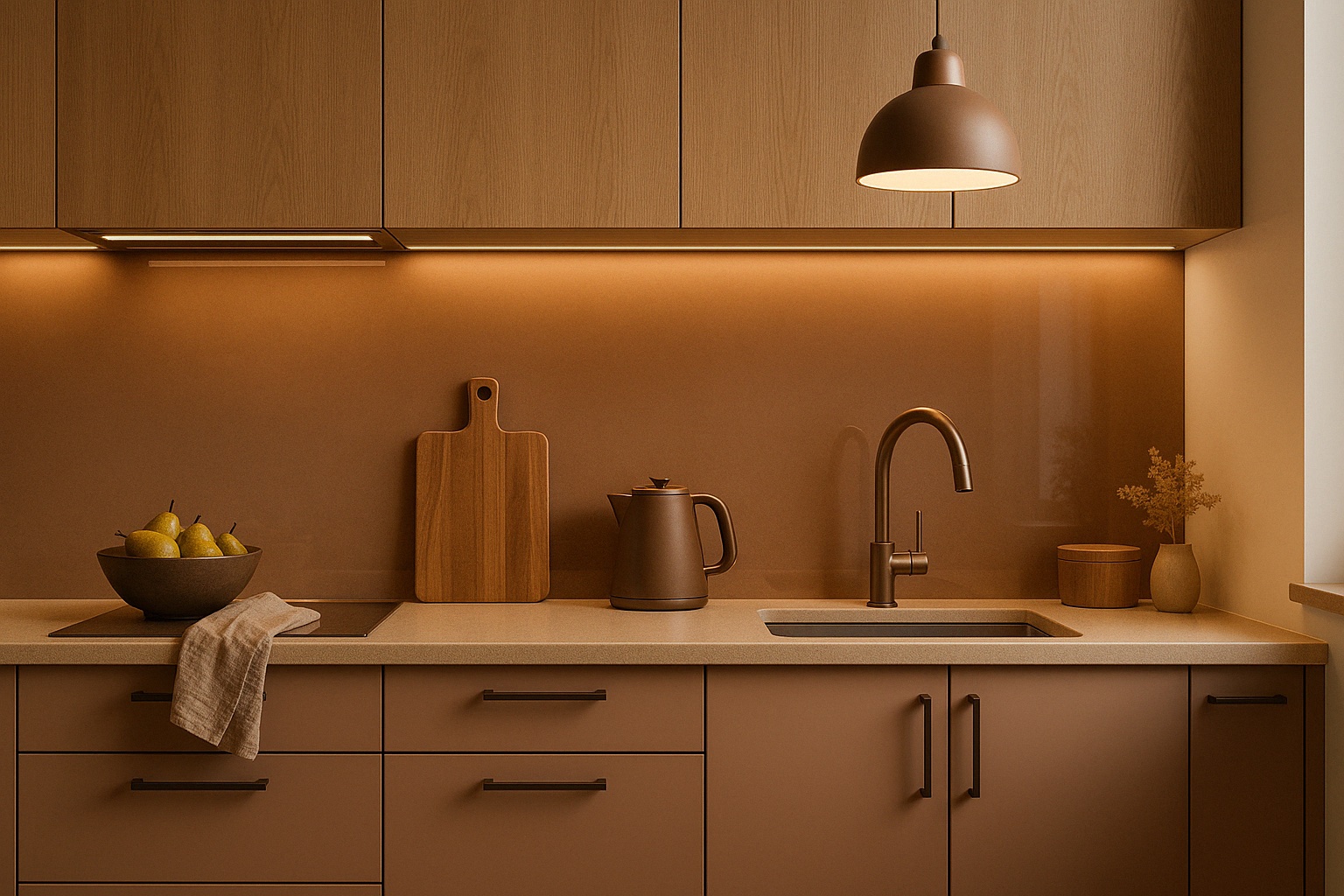
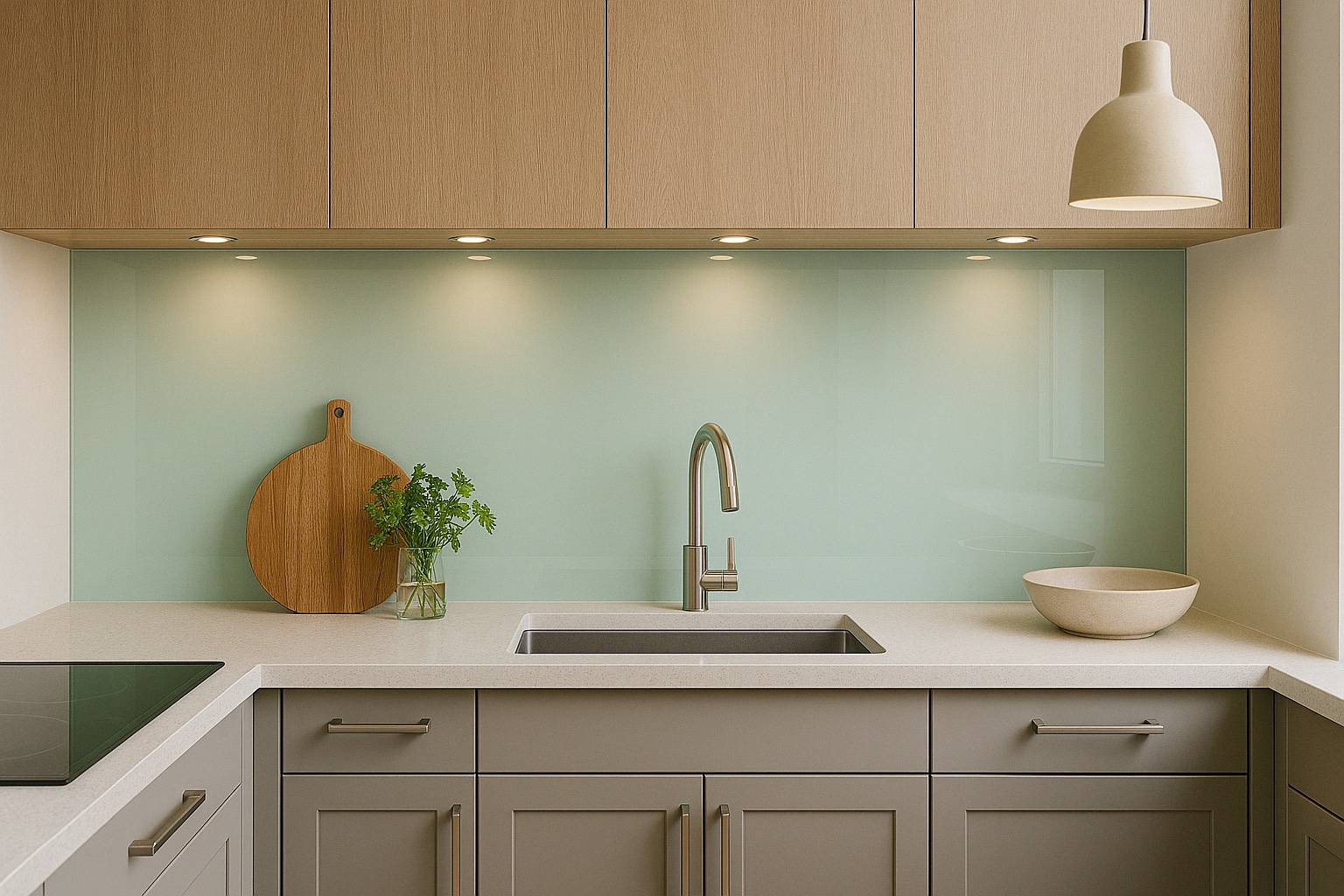
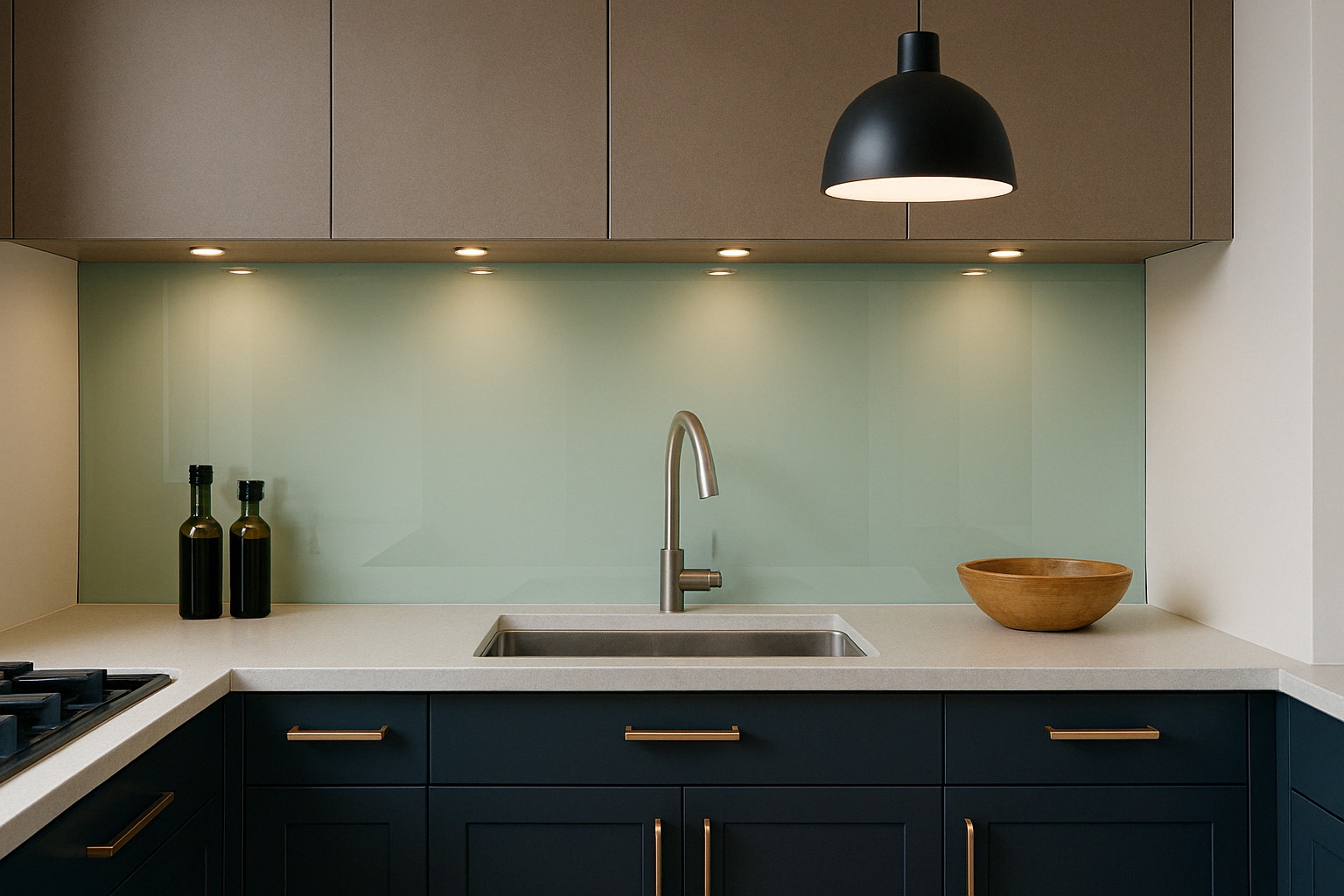
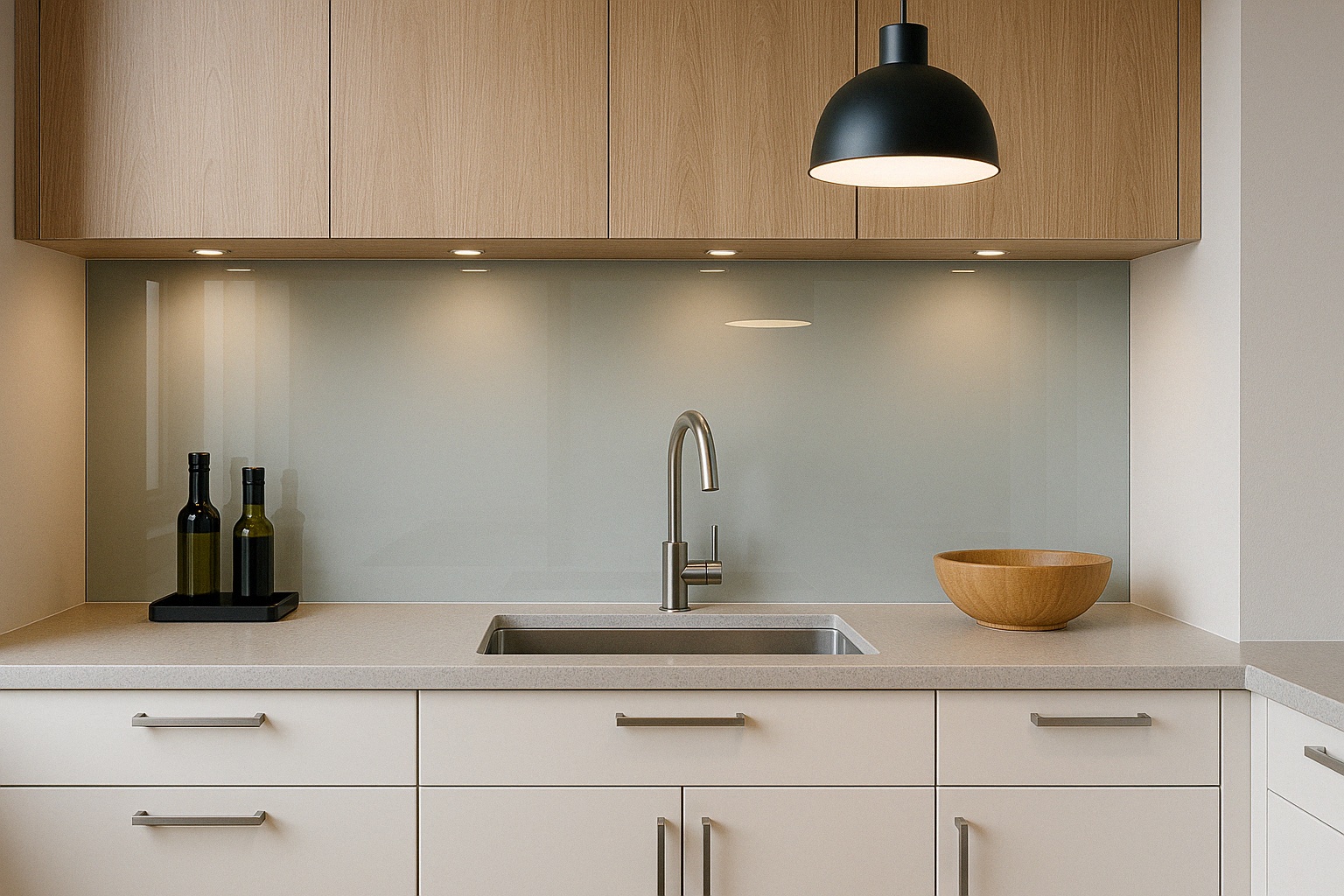
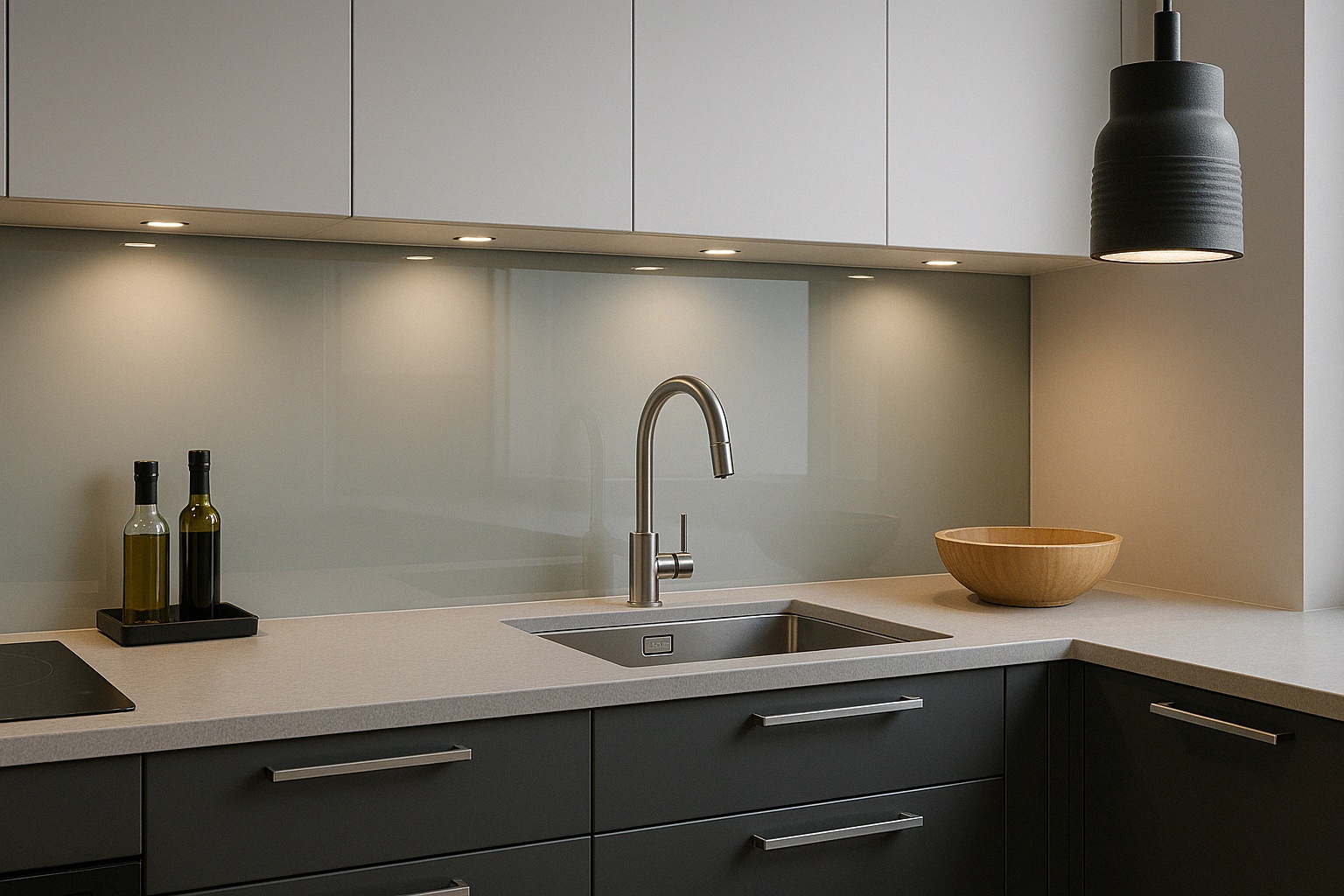
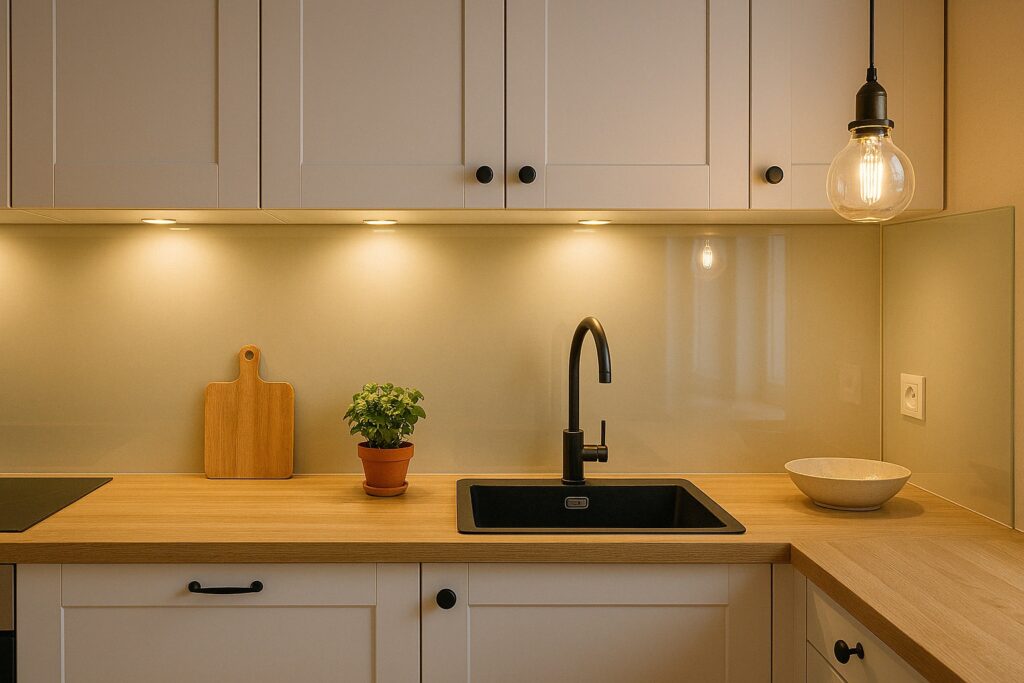
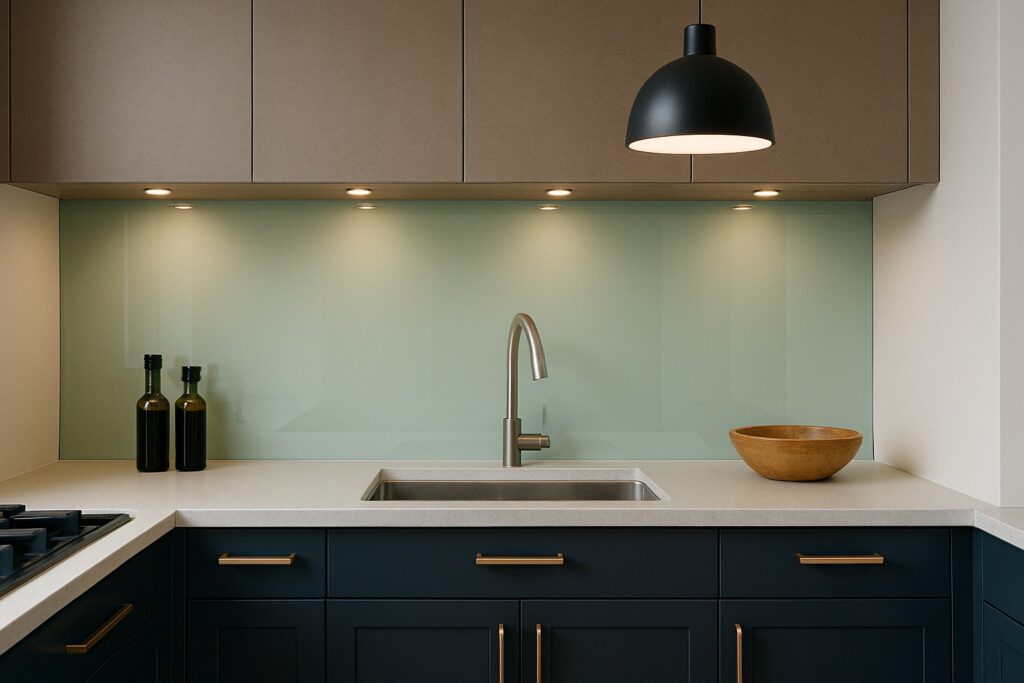
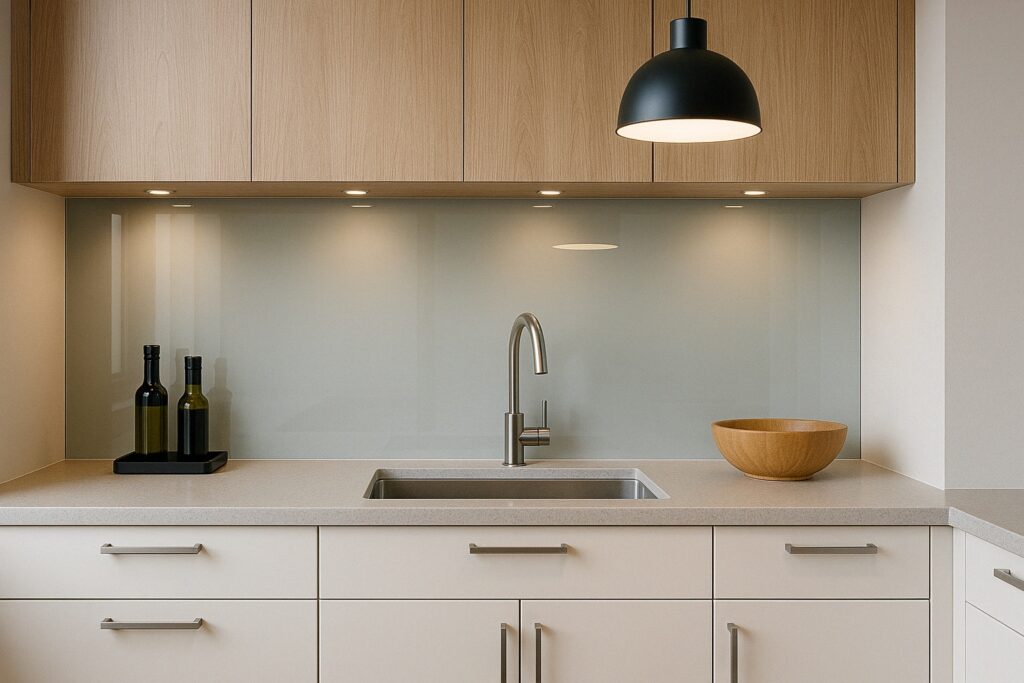
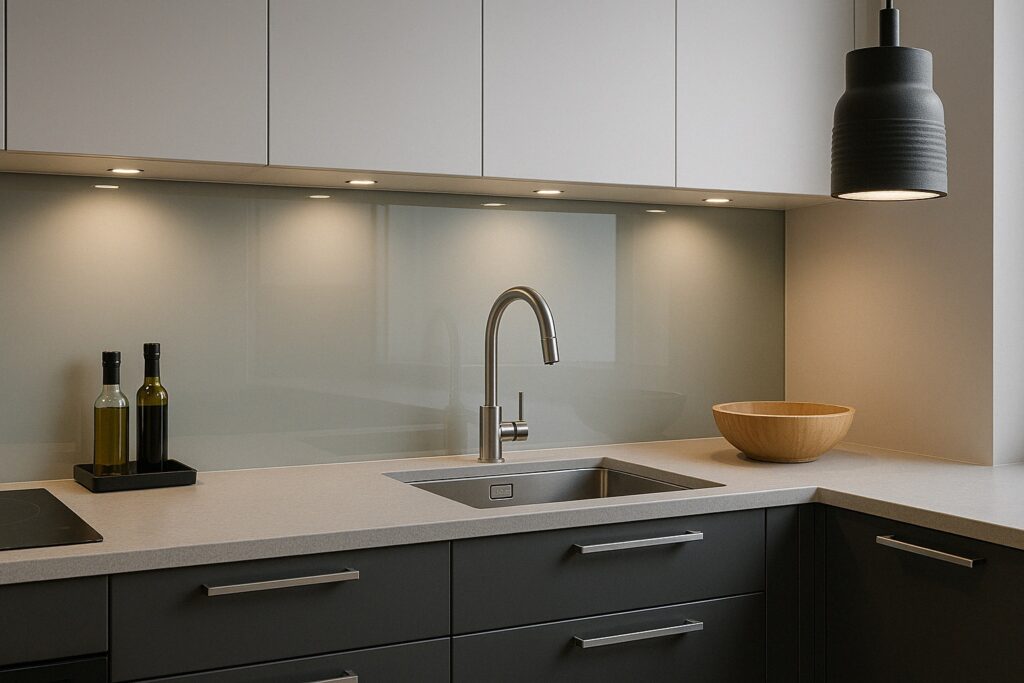
Protect your kitchen wall in style with a sleek and hygienic glass panel. This välitilan lasi is custom-cut to your dimensions and can be painted on the back using RAL tones to match your kitchen design. The result is a smooth, seamless and easy-to-clean sisustuslasi that elevates any interior.
You can choose low-iron glass for true color clarity, add holes for power outlets, and opt for tempered glass to ensure extra durability and heat resistance behind the stove.
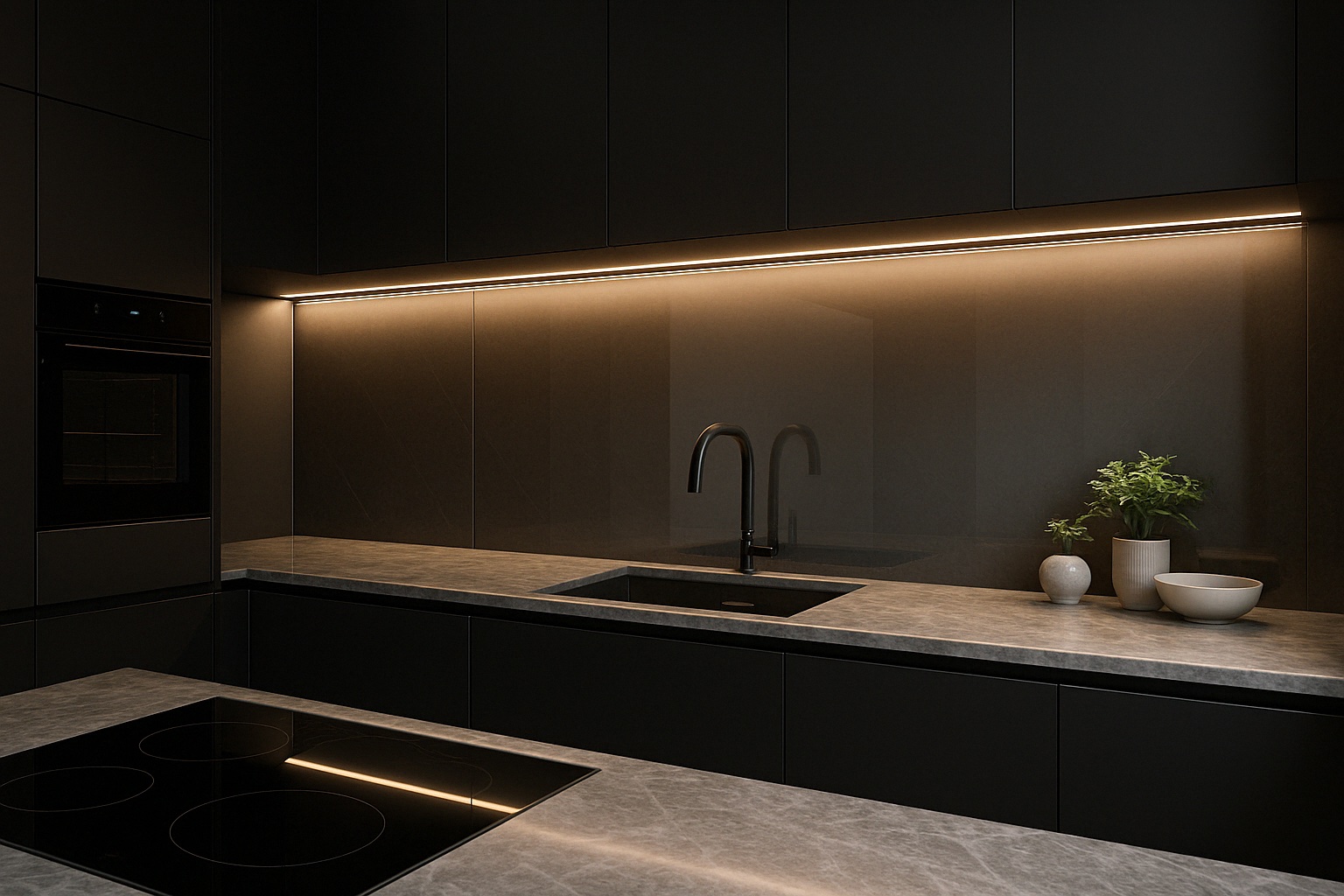
In addition to clear and backpainted glass, you can choose from our wide selection of tinted glasses, bronze or grey tones, reflective surfaces, and more. These can create stunning visual effects in modern interiors.
Note: etched or frosted glass is generally not recommended for areas with high splash or grease exposure, such as directly behind cooktops.
All glass panels are made to your measurements and delivered safely across the country.
Below you'll find more information about customization options and frequently asked questions.
Edge finishing and polish
Edge finishing and polish
In kitchen backsplash installations, the edges of the glass are often visible, so the edge finish has a big impact on both appearance and safety.
- Polished edge – Our top recommendation! The edges are ground and polished smooth and clear, creating a finished and stylish look. Also safe to touch.
- Beveled edge – A decorative slope that adds depth and sophistication. Ideal for visible edges where style matters.
- 45° bevel – A clean, minimalist detail that looks stunning in modern interiors. Because the bevel is very subtle, we recommend mechanical mounting (e.g. with point fixings) or using extremely thin silicone seams to avoid covering the finish. Keep this in mind when designing your space!
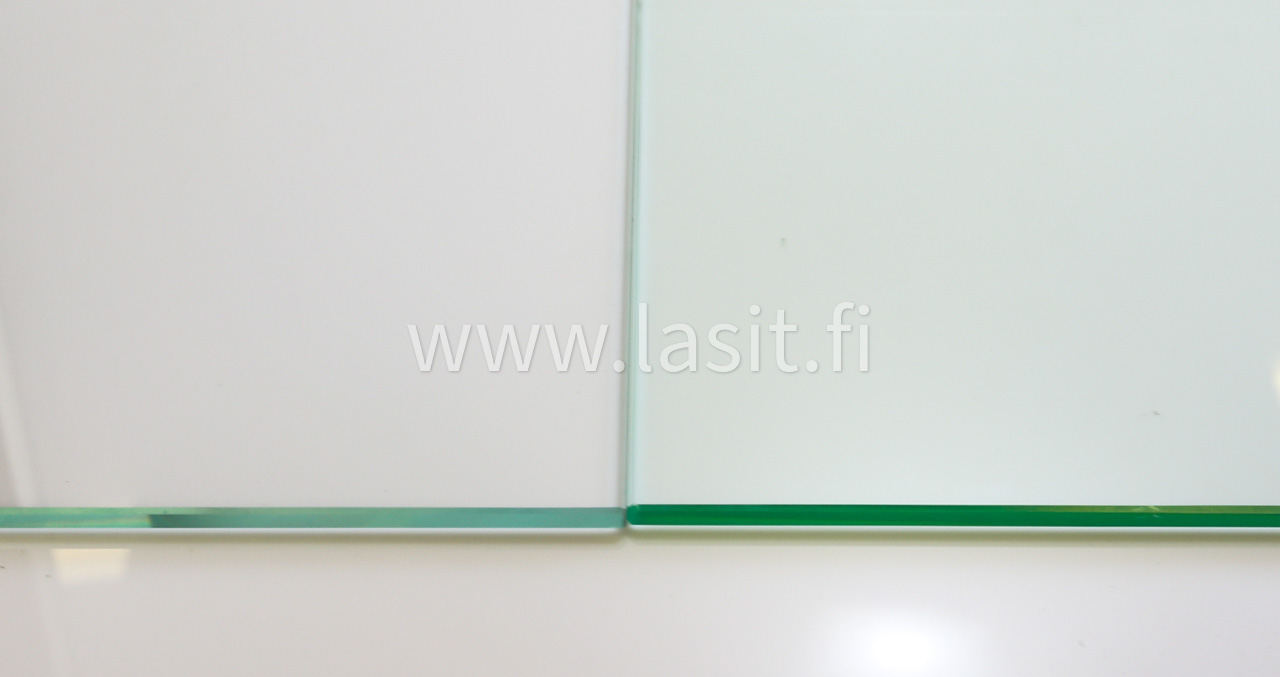
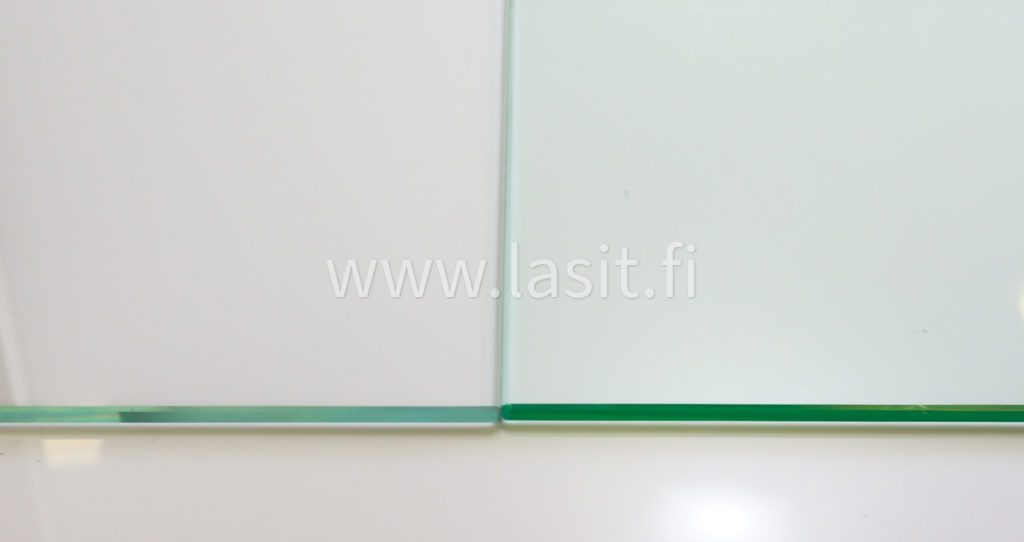
- TSH (rough cut with dulling) – Budget option. The edge remains visibly rough and greenish, but corners are dulled. Use only when all edges are fully hidden behind trim or cabinets.
Polished edge gives the best result for most backsplash installations – both elegant and safe to handle.
Backpainting (RAL colors)
Backpainting (RAL colors)
Välitilan lasi can be painted on the backside using your chosen RAL color. This hides the wall completely and gives a modern, tile-free surface with no visible seams.
Most popular colors include white, grey, beige, and black – but hundreds of shades are available. If you'd like to use your own tone, just contact our support and we’ll take care of the rest.
The paint is always applied to the back side of the glass, which is installed against the wall. It permanently protects the rear surface and keeps the glass hygienic and low-maintenance. It’s easy to clean and highly resistant to stains.
For the best color accuracy, choose low-iron glass – it reduces the natural green tint of regular float glass. Normal glass may slightly distort pale tones.
When painted black, it’s almost impossible to tell whether the glass is regular or low-iron.
Low-iron glass – for truest color rendering
Low-iron glass – for truest color rendering
Välitilan lasi can be made from low-iron glass (Optiwhite, Clearvision, Diamant), which has significantly reduced iron content compared to standard float glass. This means less green tint and a much more accurate reproduction of white and light colors.
With standard glass, white paint can look greenish. Low-iron glass keeps the shade much closer to your original color sample.
However: low-iron glass is not completely colorless. All glass affects light to some degree and introduces subtle shading. Final appearance depends on glass thickness, lighting, and wall color – so the painted color will not match paper samples exactly. Still, low-iron glass gets you the closest possible result.
The thinner the low-iron glass, the clearer the color will appear – that's why 4–6 mm is the most popular choice for backsplashes where perfect color fidelity matters.
With black paint, it's nearly impossible to see whether the glass is regular or low-iron – the difference shows only with light colors.
Glass thickness for kitchen backsplash
Glass thickness for kitchen backsplash
Välitilan lasi is almost always made using 6 mm glass, as it offers the best balance between strength, visual presence and safe handling – even when holes are drilled.
Smaller glass panels without any holes can also be made from 5 mm or even 4 mm glass, offering a lighter and slightly more affordable option.
Thicknesses above 6 mm are rarely needed in backsplash use, unless it’s part of a special design feature or visual effect.
Summary:
- 6 mm – most common and recommended
- 5 mm / 4 mm – for small and simple areas
Holes for sockets and cutouts
Holes for sockets and cutouts
Välitilan lasi can be pre-drilled for power outlets, cable passages or wall mountings. The most common size is ⌀75 mm, providing enough space for standard sockets and cover plates.
Measurements are always taken from the bottom-left corner to the center of each hole. Make sure to orient your drawing correctly!
If you’ve ordered backpainted glass, your technical drawing should always be viewed from the clear front surface – paint is applied on the back. Unpainted clear glass can be installed either side facing out.
Holes larger than ⌀20 mm can be machine-ground to a matte edge with a CNC. If the hole is visible, ⌀45 mm and above can also be fully polished for a clean look.
These special finishes are not available via the online form – contact customer support if you need a polished or matte-finished hole. Standard rough-drilled holes can be added directly in the form if you know the positions and sizes.
Tempered glass for kitchen backsplash
Tempered glass for kitchen backsplash
Välitilan lasi can be made tempered, making it much more resistant to heat and mechanical stress – ideal behind a stove, oven or coffee machine.
Tempered glass withstands up to 200 °C temperature changes and won’t crack easily from sudden steam or hot cookware contact.
We strongly recommend tempered glass especially if any holes are drilled. The internal tension of tempered glass helps prevent cracks near the edges or holes. Un-tempered glass can break from minor pressure on a socket frame or from uneven installation.
Tempered glass is also safer: when broken, it shatters into small blunt pieces rather than sharp, dangerous shards.
Measuring instructions and installation tips
Measuring instructions and installation tips
Välitilan lasi is custom-made to your exact measurements – but accuracy is everything. We highly recommend measuring the installation site yourself, or having a professional measure it on-site.
Do not blindly rely on kitchen supplier drawings – they may include outer frame sizes or estimates that don't match real-world conditions. Always measure the actual wall space yourself.
Width: Always subtract at least 2–3 mm from the measured width to allow room for installation without scratching or jamming the glass. Walls may be slightly uneven.
Height: If the glass fits under upper cabinets, find the lowest point along the bottom edge and subtract 2–5 mm from that height to ensure proper clearance.
Installation tips:
- Place 1–2 mm thick spacers between the glass and countertop – this prevents glass corners from chipping during installation. The spacer can be rubber or other thin, durable, non-rotting material.
- Seal the bottom edge with silicone to prevent water from getting behind the glass.
- Top edge: The most recommended method is a finishing strip mounted under the cabinet that presses the glass securely against the wall.
- If a finishing strip isn't possible, you can gently press the glass toward the wall and use silicone to seal the top edge.
- We also offer D30 mm standoff mounts that allow mechanical fastening through a hole in the glass if needed.
For backpainted glass: always view the drawing from the clear front side. The paint goes on the back and must face the wall. Clear unpainted glass can be installed either way.
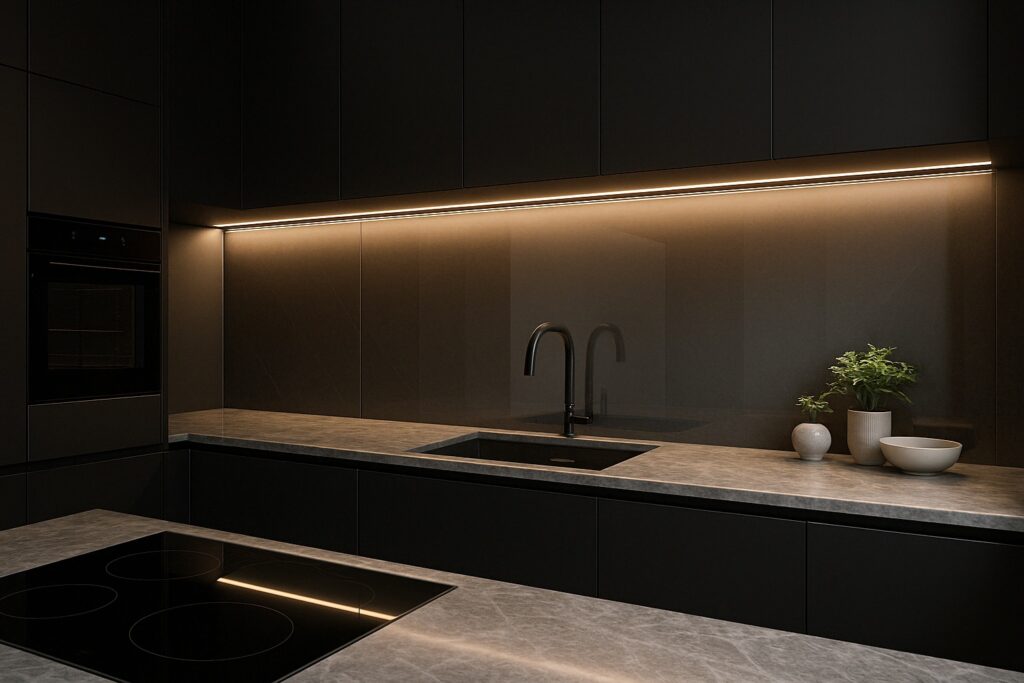
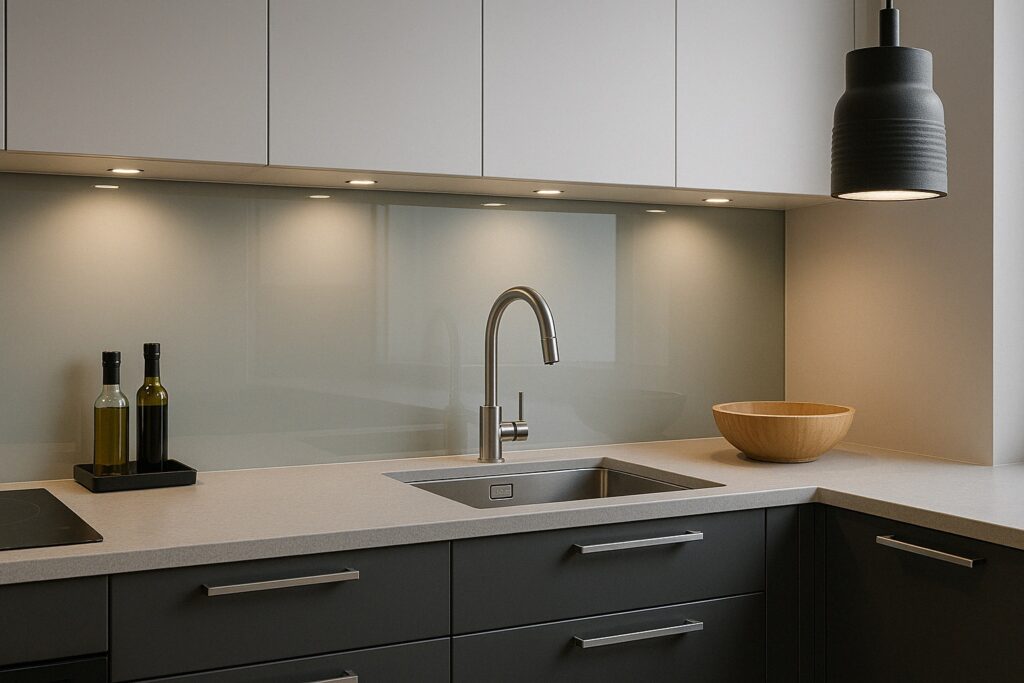
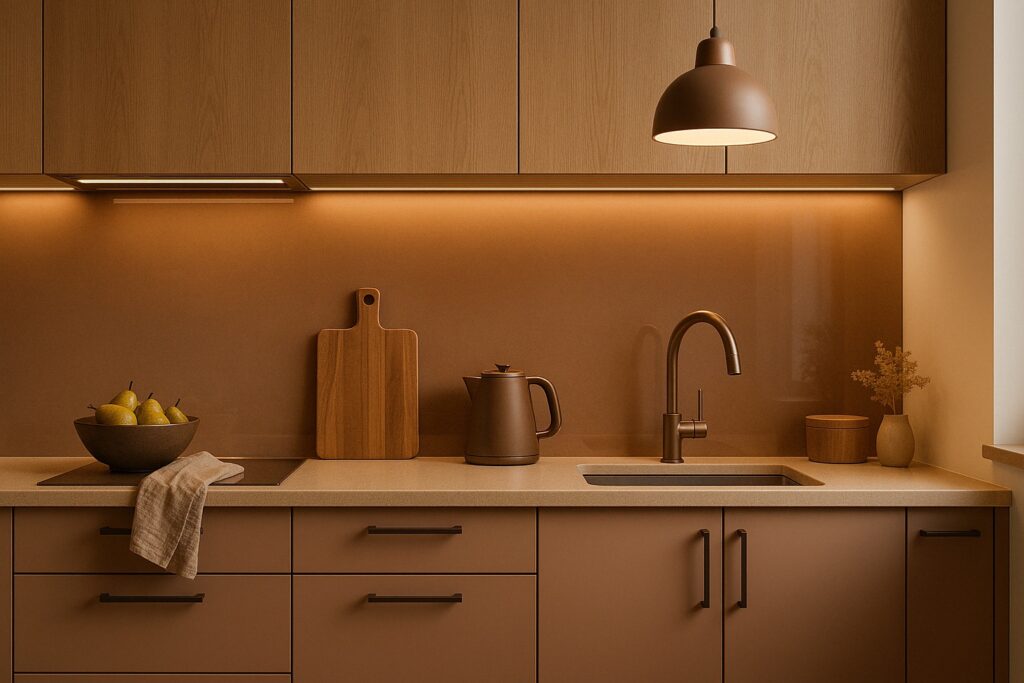
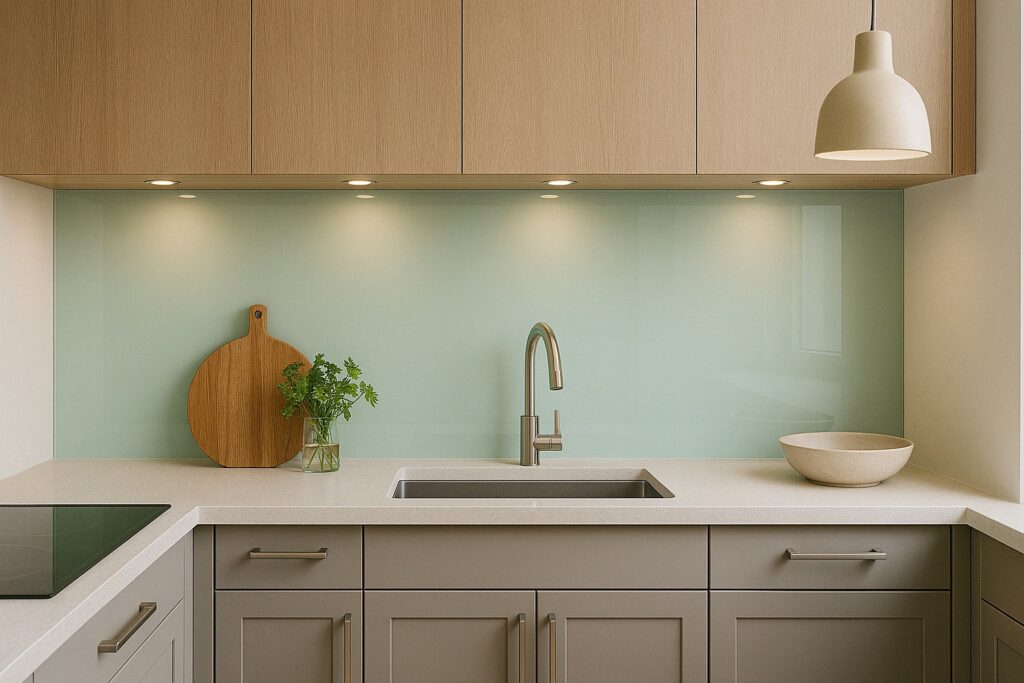
📸 Example photos of the product
Can I install the glass myself?
Yes – many of our customers successfully install their kitchen backsplash glass themselves. However, it's absolutely essential to measure carefully and use all required safety equipment: safety shoes, cut-resistant gloves and sleeves, long-sleeved protective clothing, and safety goggles are all very important. Handling glass always involves risk, so be properly prepared and take extra care to avoid bumping the glass edges or corners against any hard surfaces.
How do I select the backpaint color?
You can choose a standard RAL color directly on the order form, or contact our customer service for a custom shade. Backpaint is always applied to the back side of clear or low-iron glass.
What thickness do you recommend?
6 mm is the most common choice for its durability and handling ease. For small areas, 5 mm or 4 mm glass may be sufficient.
Can I drill holes myself?
No – all holes must be drilled before tempering. Please include holes when ordering or contact customer service for help.
How is the glass attached to the wall?
Typically with silicone or a top trim strip under the cabinet that presses the glass against the wall. We also offer 30 mm standoff mounts for mechanical fastening.