Description
🧾 Custom-made Table glass cover
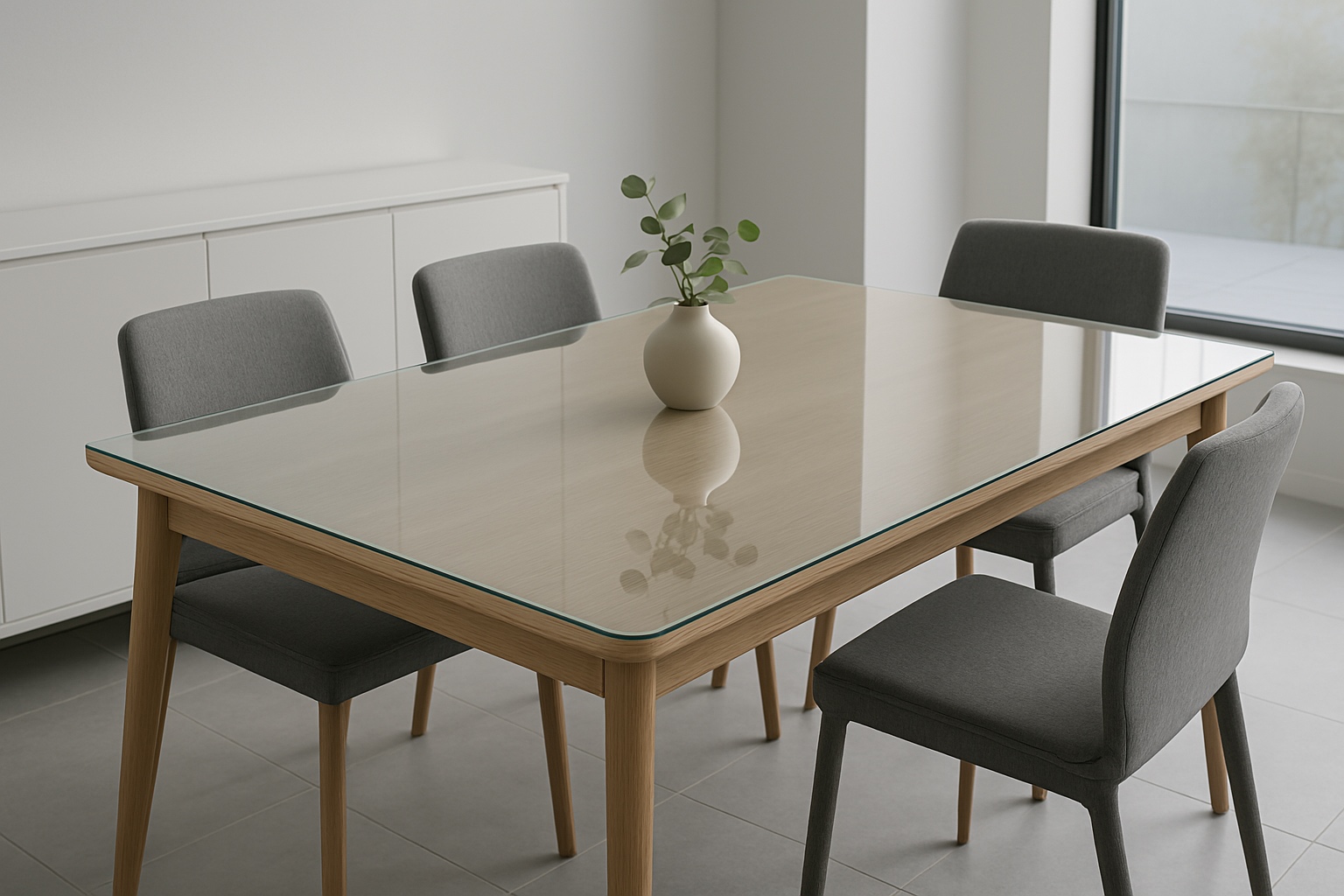
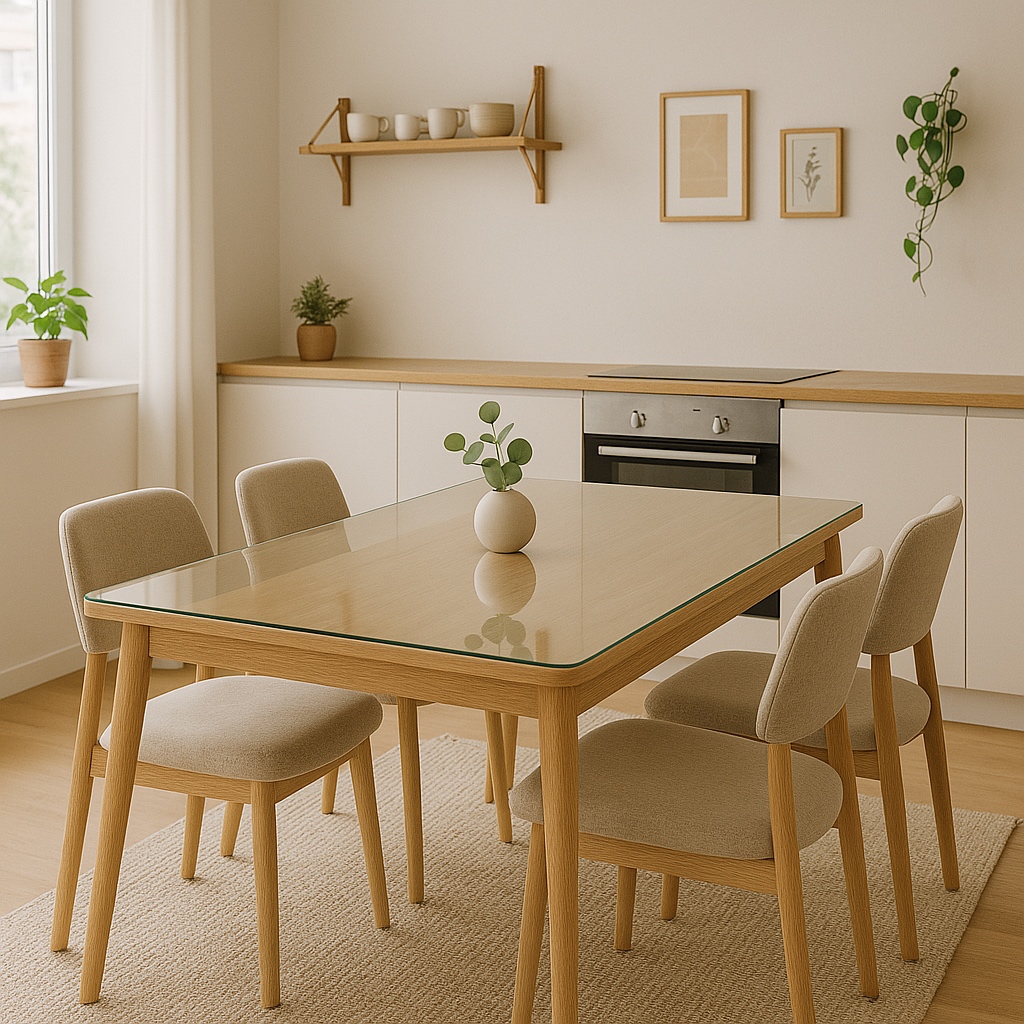
Imagine a beautifully finished table, protected by crystal-clear glass – the surface stays clean, bright, and luxurious. This lasi is the perfect choice for creating a sleek and functional table glass cover. It’s tailor-made to your exact measurements and can be fully customized to match your interior and needs.
Whether you’re setting the scene for cozy dinners, elegant hosting, or modern home offices, this glass top adds that final touch. You can select low-iron clarity, rounded corners, RAL backpainting, or add cable holes – your creativity sets the limit.
Tempered glass is recommended for extra durability. It resists heat and mechanical stress, making it suitable for everyday use in any home.
Every panel is shipped with care – fast and securely.
Below you'll find more information about glass options and frequently asked questions.
Low-iron glass (Optiwhite / Clearvision)
Low-iron glass (Optiwhite / Clearvision)
If you're looking for table glass cover to appear as neutral and clear as possible, low-iron glass is the ideal choice.
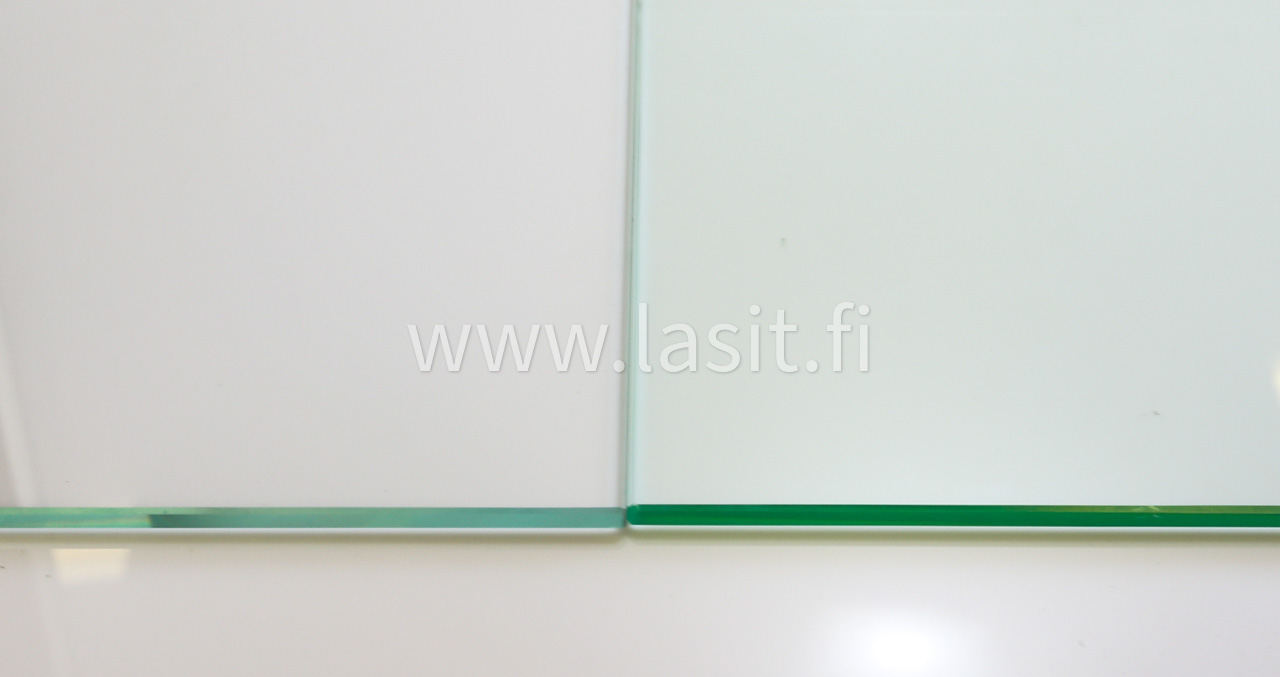
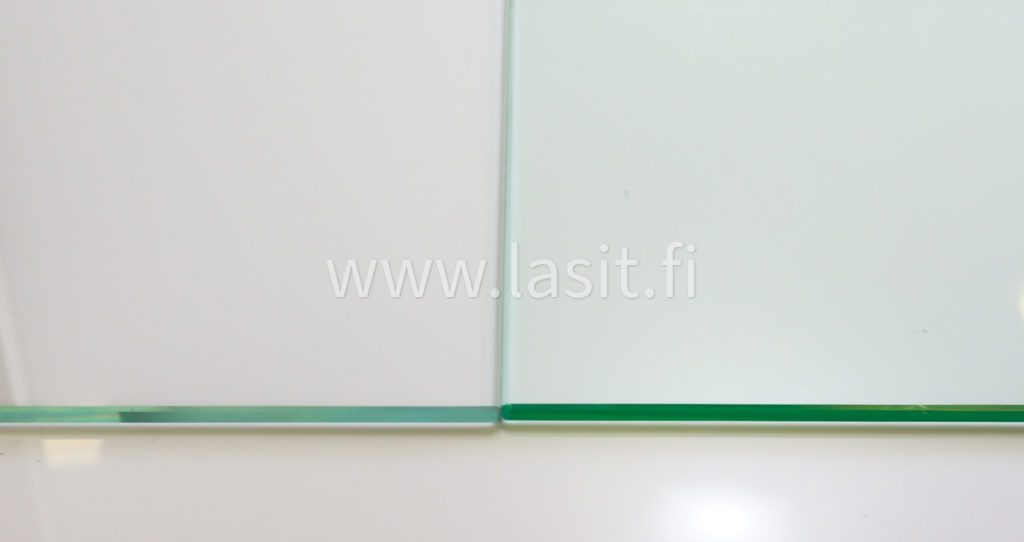
Low-iron glass (also known as Optiwhite, Clearvision, Diamant) has significantly reduced iron content compared to standard float glass. This results in a noticeably purer appearance, especially over white or light-colored backgrounds.
Note: Low-iron glass is not 100% colorless – the green tint is still present, but much less intense. This makes a dramatic difference when painting glass from behind or placing it over white furniture.
Edge greenness still occurs on larger pieces and depends on lighting, angle and the edge finish. A frosted edge or 45° bevel can help soften this visually.
Low-iron glass is best for interior glass, tabletop protectors, or painted glass panels where color accuracy is critical.
We recommend low-iron glass whenever your design calls for clean transparency and minimal coloration.
Edge finishes – safety meets design
Edge finishes – safety meets design
When using table glass cover in a visible space or where people may touch the edges, the type of edge finish matters greatly – both for safety and style.
Edge processing affects how the glass looks, feels, and reflects light. A raw or sharp edge can feel rough or even dangerous in everyday use.
Below are common edge finish options:
- Rough edge (TSH) – The cut edge is visible, but sharp edges are dulled. Used when the edge is hidden or for cost-effective solutions.
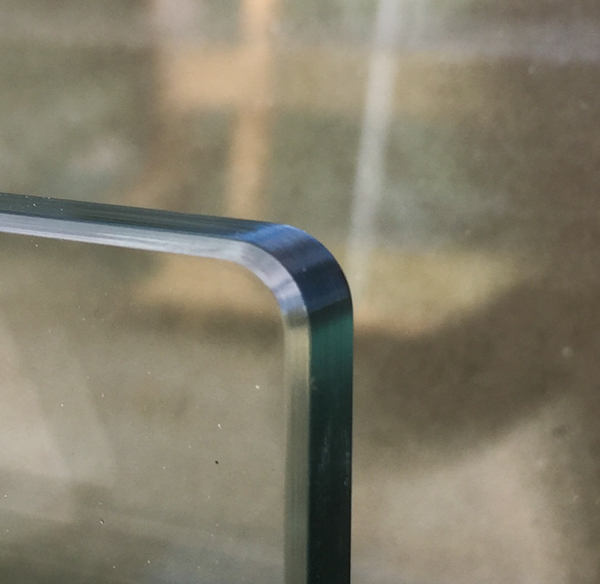
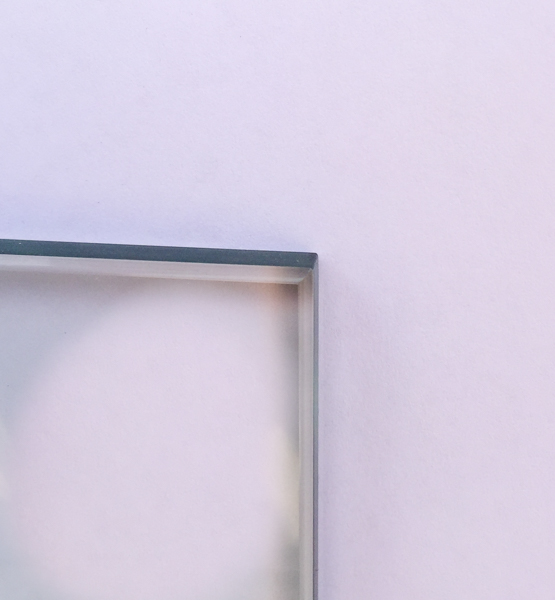
- Polished edge – Edges are ground smooth and polished to a glossy finish. Perfect for table glass and visible areas – looks refined and feels smooth.
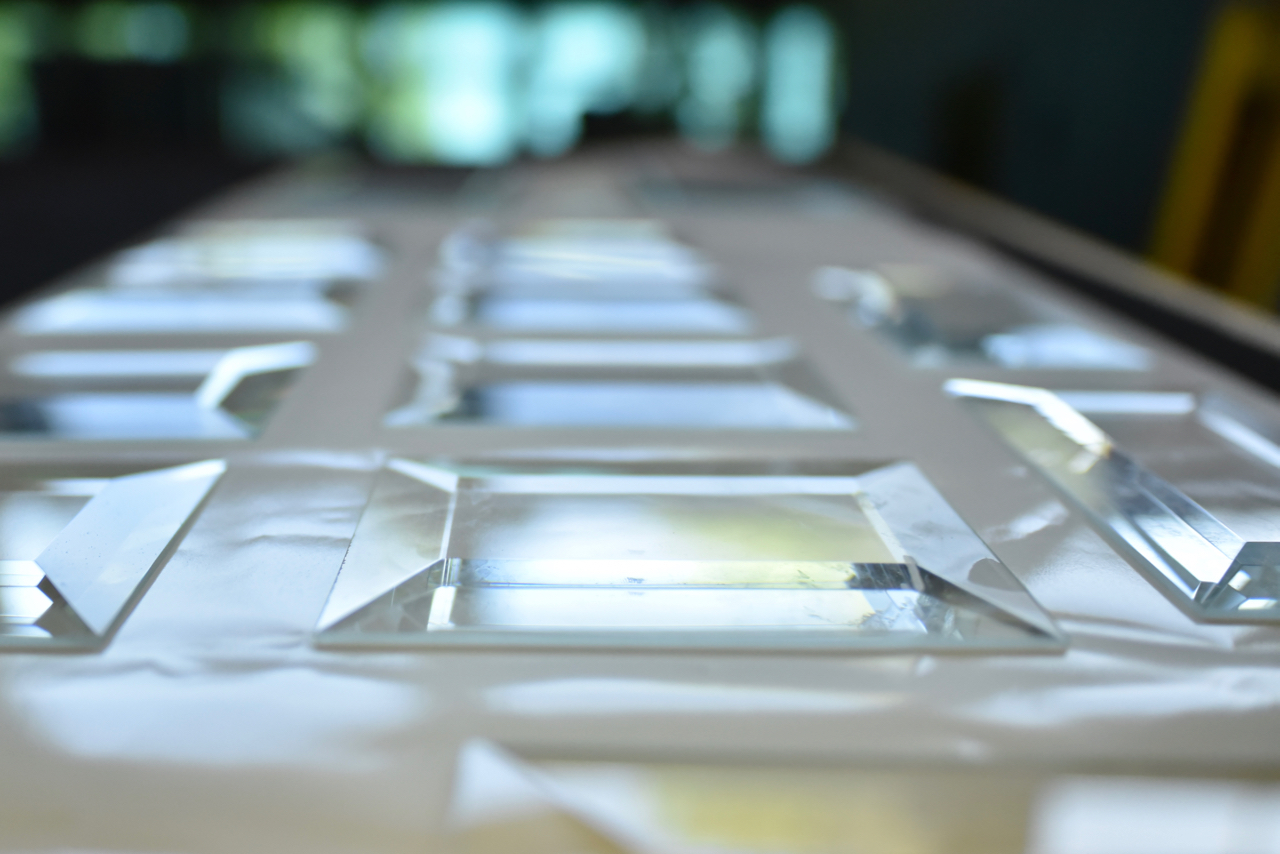
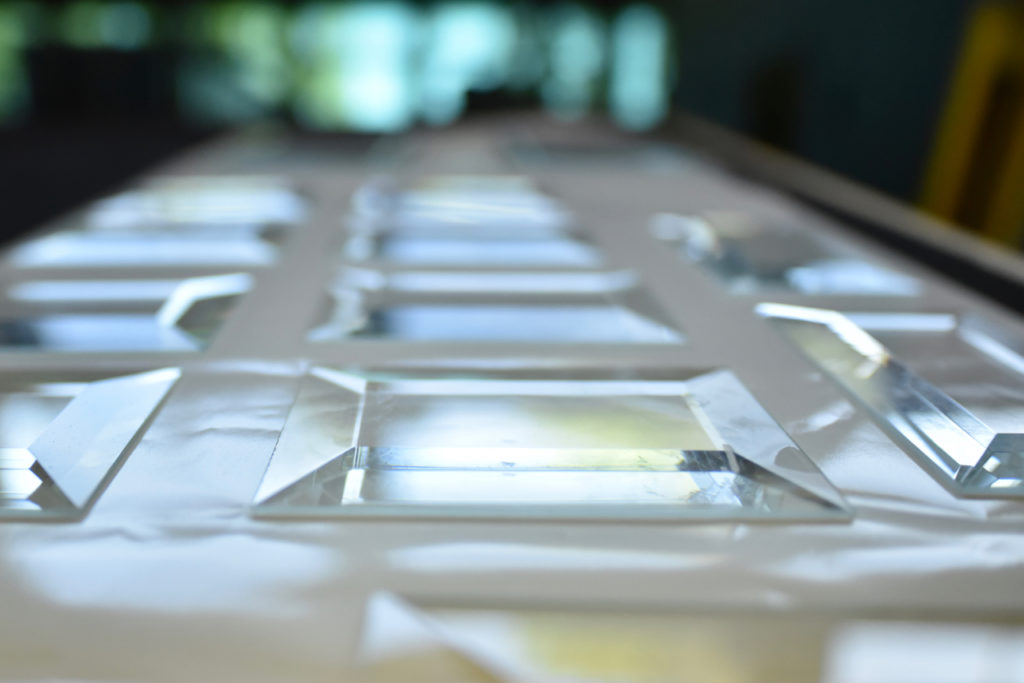
- Beveled edge – Decorative sloped edge (typically 10–30 mm). Offers a classic, high-end appearance – great for interior and feature use.
- 45° bevel – Clean and modern angle cut. Creates a precise architectural detail, especially in minimalist spaces or statement glasswork.
Choose your edge based on where the glass will be and the impression you want to make. For most tabletop glass, polished edges are the go-to: safe, elegant and comfortable to handle.
Tempered glass – safe and durable choice
Tempered glass – safe and durable choice
table glass cover can be made tempered, making it an excellent choice for demanding everyday use – such as dining tables, family homes, or areas with temperature changes.
Tempered glass is heat-treated to create internal tension. This process gives it the following properties:
- Withstands up to 200°C thermal shock (e.g. placing a hot coffee pot or pan directly on the glass surface won't cause it to crack)
- Better resistance to bending during handling and installation – much safer to move and install
- Breaks into small fragments rather than large sharp shards, reducing serious injury risk
Tempered glass cannot be altered afterwards – all holes, cutouts and shaping must be done before tempering.
It's important to note that tempered glass is not impact-proof. A sharp hit to the edge or corner may still break the glass. We recommend adding small corner radius (e.g. R3 mm) to reduce localized stress and improve safety.
We strongly recommend tempering for larger glass panels, glass with holes, or any applications where thermal load, mechanical stress or safety are key concerns.
Glass thickness – depends on your use case
Glass thickness – depends on your use case
Table glass cover can be manufactured in various thicknesses depending on the intended use. Choosing the right thickness ensures safety, comfort and durability.
4–5 mm – Suitable for small protective covers, such as decorative panels up to around 700 × 700 mm. May be chosen for aesthetic reasons when a very slim glass is desired, but in most cases we recommend 6 mm as the minimum.
6 mm – The most common and recommended thickness for tabletop covers. Strong enough for glass up to around 1000 × 2000 mm. Safe and sturdy for everyday use and cleaning.
8–10 mm – Offers a firmer feel for larger pieces or when a heavier look is desired. Also works well for light glass-top tables where the glass is visible but not load-bearing.
8–19 mm – Used for fully glass table tops that must carry weight. Provides a bold, architectural look and high structural strength.
The larger the glass, the thicker it should be. Also consider use: a coffee table can use thinner glass than a family dining table where people lean or place heavier objects.
Not sure what’s best? Contact us – we’ll help you pick the perfect thickness for your table glass cover.
Holes – for mounting, cables or design elements
Holes – for mounting, cables or design elements
Table glass cover can be supplied with pre-drilled holes for a wide variety of use cases:
- cable passthroughs (lighting, electronics)
- mounting points for legs, brackets, or fittings
- decorative features or embedded elements
All holes must be drilled before tempering – it is not possible to add holes to already tempered glass. That's why hole planning should always be done before ordering.
Hole positions are always given as distance from the glass edge to the center of the hole (e.g. from the bottom-left corner). Please also indicate the hole diameter and include a clear sketch or photo with measurements if possible.
Like the edges of the glass, hole edges are left rough and not polished. We recommend designing the holes to be covered by hardware or furniture parts.
For holes larger than 45 mm in diameter, we can optionally polish them mechanically for a cleaner finish. If you need large, visible holes, please contact our support team – we'll help you find the best solution.
Not sure about sizing or placement? Our team is happy to help – we'll ensure your table glass cover works exactly as intended.
Back-painted glass – add color and elegance
Back-painted glass – add color and elegance
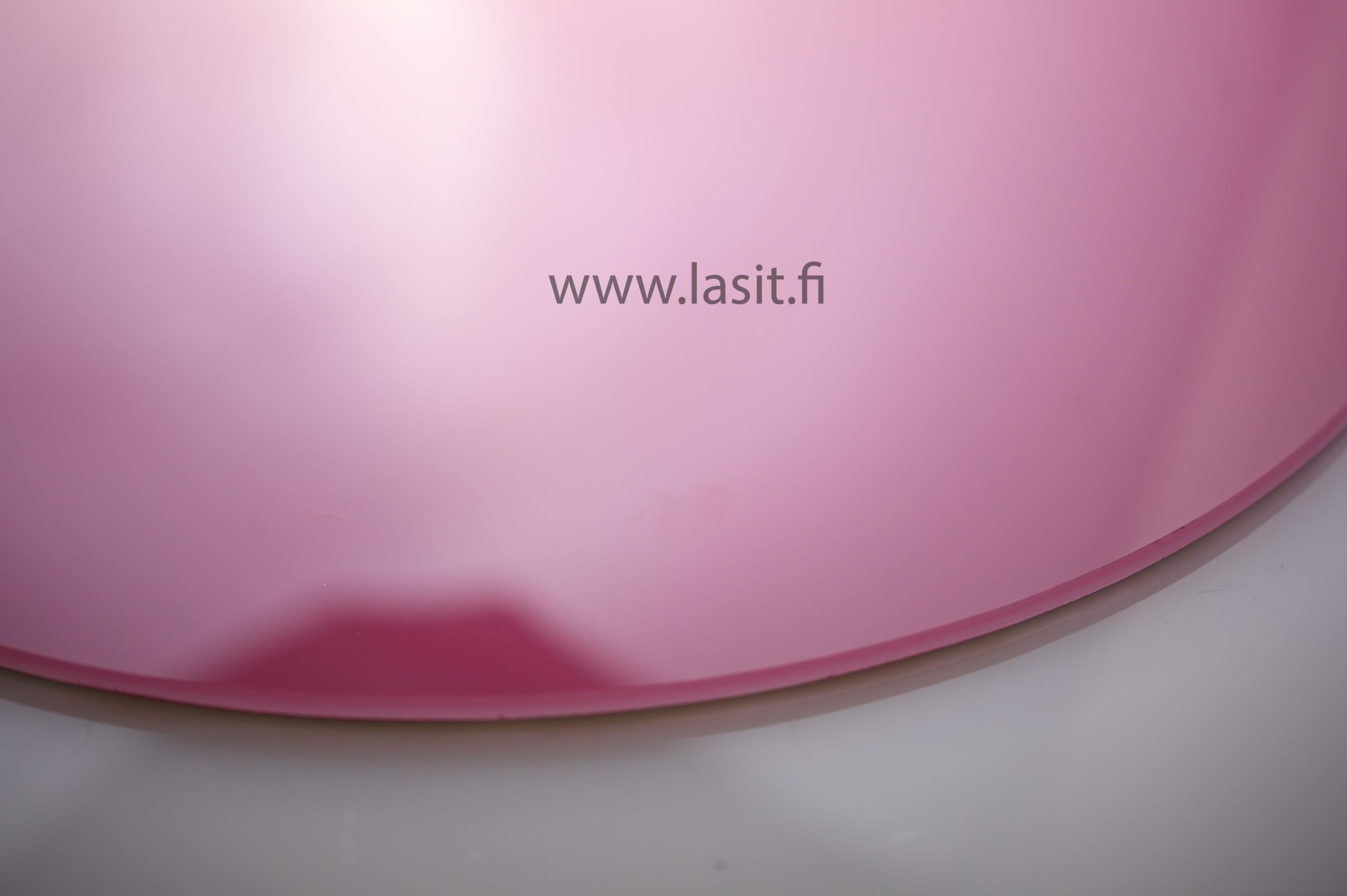
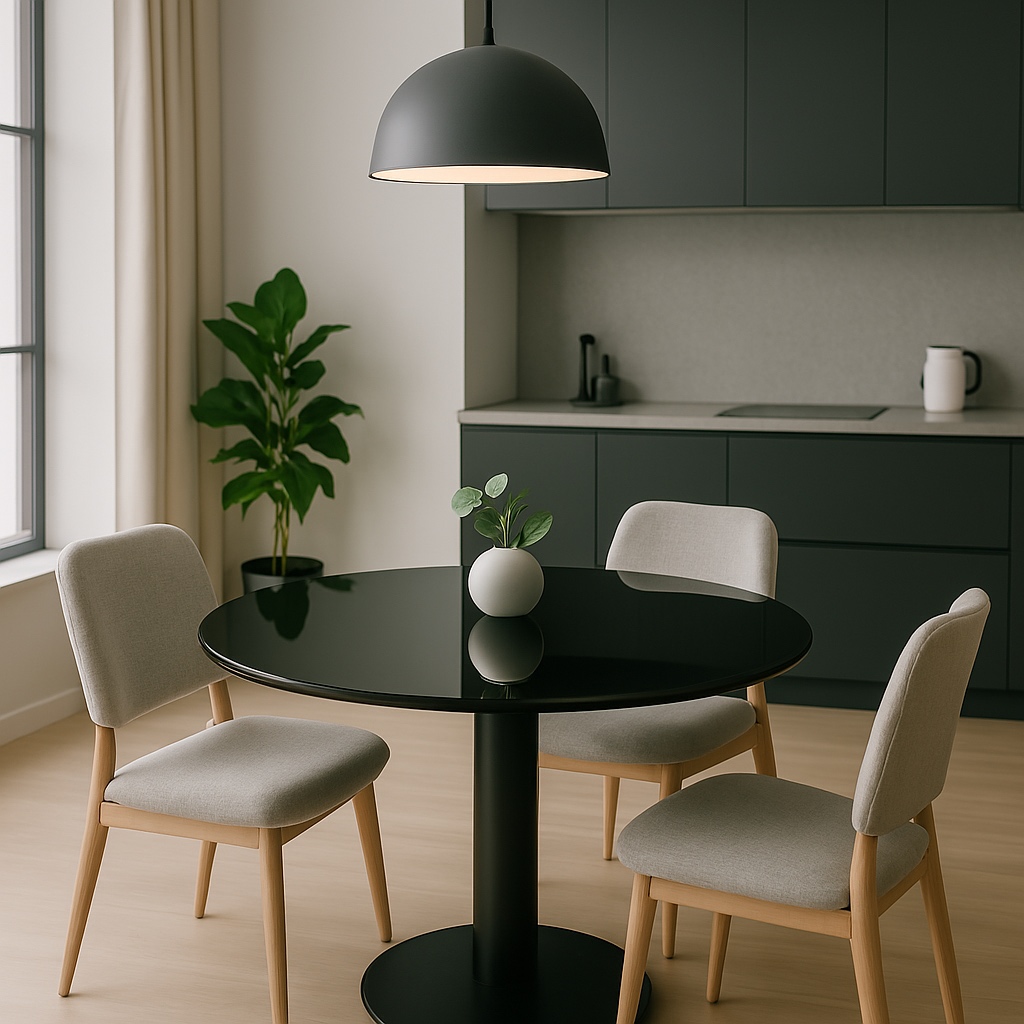
Table glass cover can also be made as back-painted glass, which fully hides the surface beneath and provides a sleek, modern finish. A perfect choice when you want to combine protection with interior design flair.
The back side of the glass is painted with a fully opaque RAL color. We recommend using low-iron glass for painted glass, especially with white or light tones, to ensure accurate color rendering.
When using black paint, there is almost no visible difference between standard and low-iron glass – both will appear virtually identical. Therefore, we usually do not recommend low-iron glass for black-painted applications.
Typical uses include:
- – table protectors to cover an existing surface
- – kitchen backsplashes
- – wall panels and decorative glass
You can choose a standard color from our dropdown menu using the RAL chart. If you’d like us to paint the glass in a custom color or match your own sample, please contact our customer support – we’re happy to help with individual needs.
Back-painted glass is intended for indoor use only. The painted side must always face against another surface and be protected from scratches. For example, in a table glass cover, the painted side is on the underside and not visible – make sure your measurements account for this orientation.
Corner radii – safety and smooth design
Corner radii – safety and smooth design
table glass cover can be made with rounded corners, improving both safety and aesthetics. The radius (R) is part of a circle cut from each corner of the glass.
We typically recommend R3 mm as a standard softening – it's enough to remove the sharp point without changing the overall shape too much. Ideal for family use or busy environments.
Corner radius examples:
- R1 mm – Barely visible, but you can feel the edge is softened when touching.
- R3 mm – Lightly rounded and visible to the eye. Most common for table protectors.
- R10–12.5 mm – Clearly visible rounding, about the size of a 2 euro coin (12.5 mm).
- R60 mm – Similar to a CD radius, creates a soft corner effect.
- R150 mm – Like an LP record, used for more dramatic or artistic shaping.
You can provide a custom drawing or simply select your preferred radius directly in our calculator. Radii can also be combined with holes or custom shapes.
Measuring instructions – for the perfect fit
Measuring instructions – for the perfect fit
Table glass cover should be measured carefully to ensure a sleek, accurate result – whether it's for a dining table, cabinet, or any flat surface.
We generally recommend sizing the glass to be exactly the same as the tabletop or 1 mm smaller on each side. This avoids overhangs or awkward fit.
Make sure you are measuring the actual top surface – not the outer dimensions of the furniture. Product specs often include frames or overhangs, which can lead to incorrect glass size.
Measure width and depth from several points, especially if the surface is older or uneven. If there’s any bowing or variance, choosing the smaller dimension ensures a better result.
If your table glass cover is going on a curved or irregularly shaped surface, you can send us a drawing or a 1:1 scale template cut from sturdy cardboard or paper. This is especially useful for uniquely shaped tables and helps ensure a precise fit.
Please make sure the template is cut to the final shape and size – this way, you can verify the fit yourself before ordering, and we can produce the glass exactly to match it.
Glass care and usage tips – keeping your table glass beautiful for decades
Glass care and usage tips – keeping your table glass beautiful for decades
A glass cover is a brilliant way to protect the original tabletop surface from scratches, moisture, and wear. The glass takes the daily punishment so your table underneath stays untouched.
Glass is a hard and durable material, but it is not scratch-proof. Over the years, plates, cups, and bowls slide across the surface thousands of times – and each movement grinds the surface ever so slightly. Gradually, this begins to show, especially in certain lighting or viewing angles.
Rough-bottomed ceramics, such as handmade stoneware mugs or unglazed bowls, wear the surface significantly more than smooth porcelain. And if even a tiny grain of sand or crumb gets trapped between a dish and the glass – one slide can leave a visible scratch.
The good news? Surface wear is easy to prevent! Small practical choices make an enormous difference:
- Coasters and placemats – Felt, cork, or silicone pads under dishes are the simplest and most effective protection. Especially under everyday tableware.
- Tablecloth or placemat for meals – A cloth or placemat on the dining area protects exactly the spot where dishes move the most.
- Clean regularly – Hard particles carried onto the table with everyday items, such as grains of sand or stone dust, are harder than glass itself and can act like sandpaper under a dish. Wipe the glass with a microfibre cloth before setting the table.
- Avoid sliding dishes – Lift the dish up instead of dragging it across the glass surface.
What about plastic or acrylic covers? Acrylic and plexiglass scratch dramatically faster than glass – often within days or weeks of use. Plastic is a soft material, so every dish and even a tablecloth will leave marks on it. Glass lasts years before the first signs of use appear, and with the right protection, even decades.
A glass cover is an excellent investment for protecting your table – it withstands daily wear many times better than plastic, and with simple protective measures it stays beautiful throughout its entire lifespan.
📸 Example photos of the product
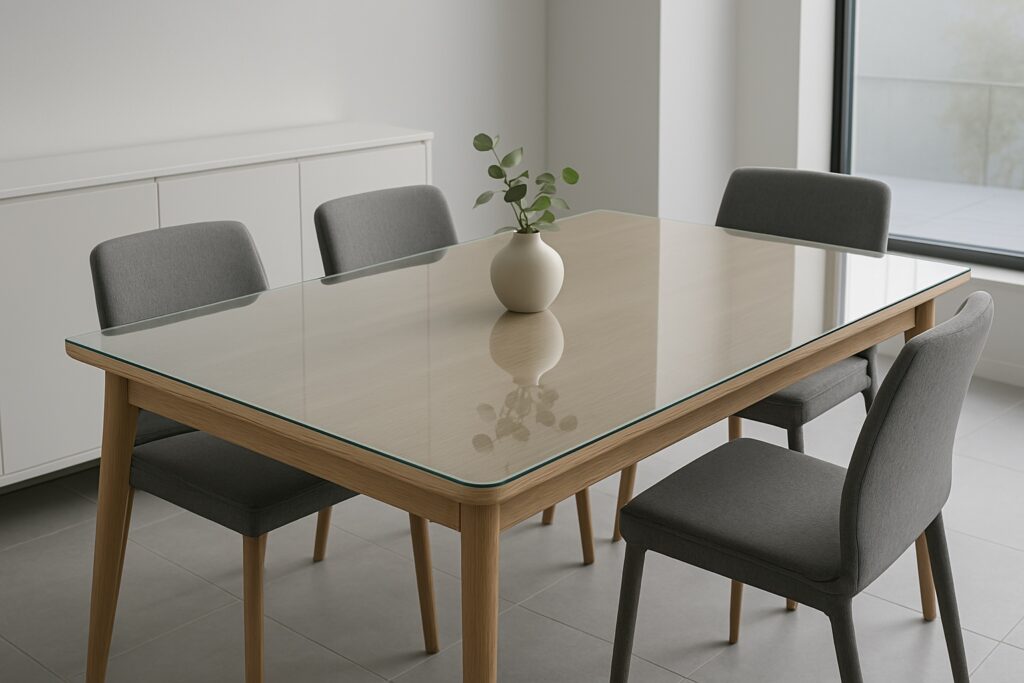
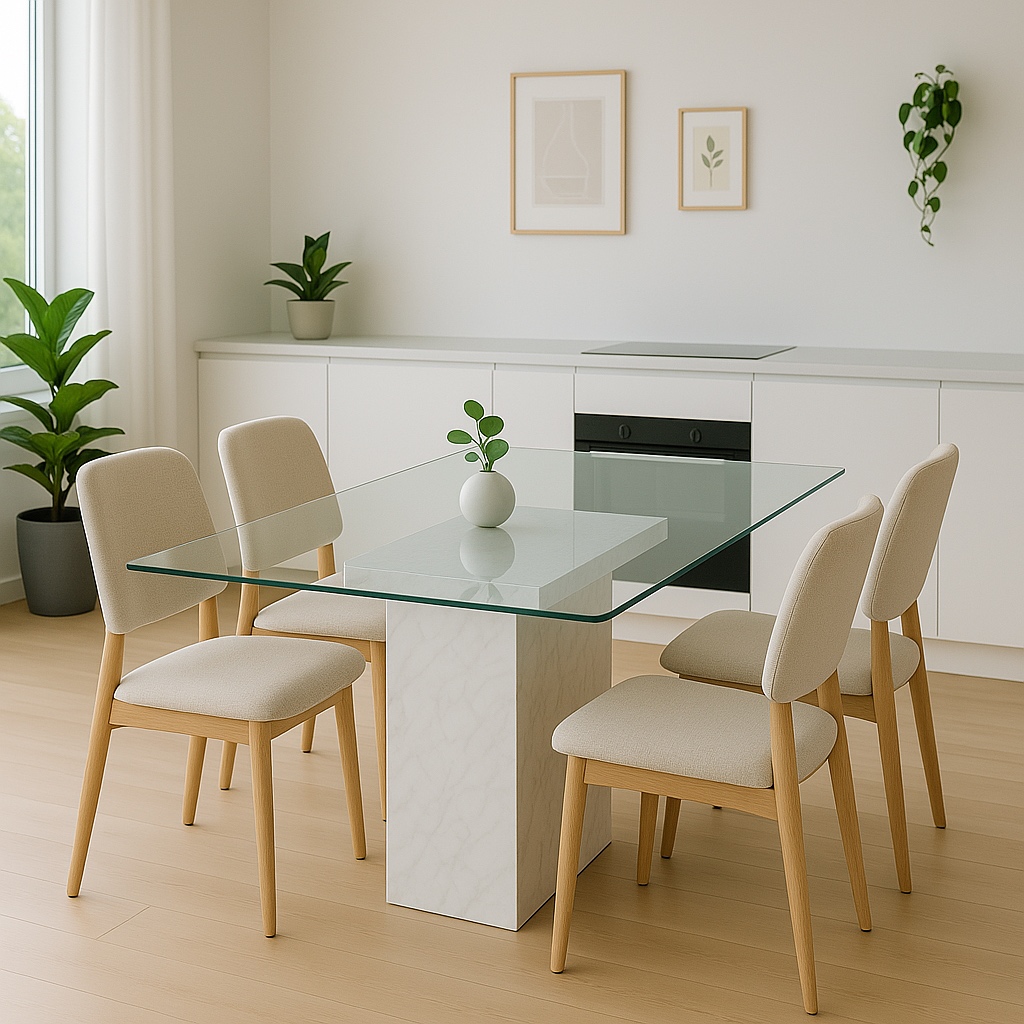
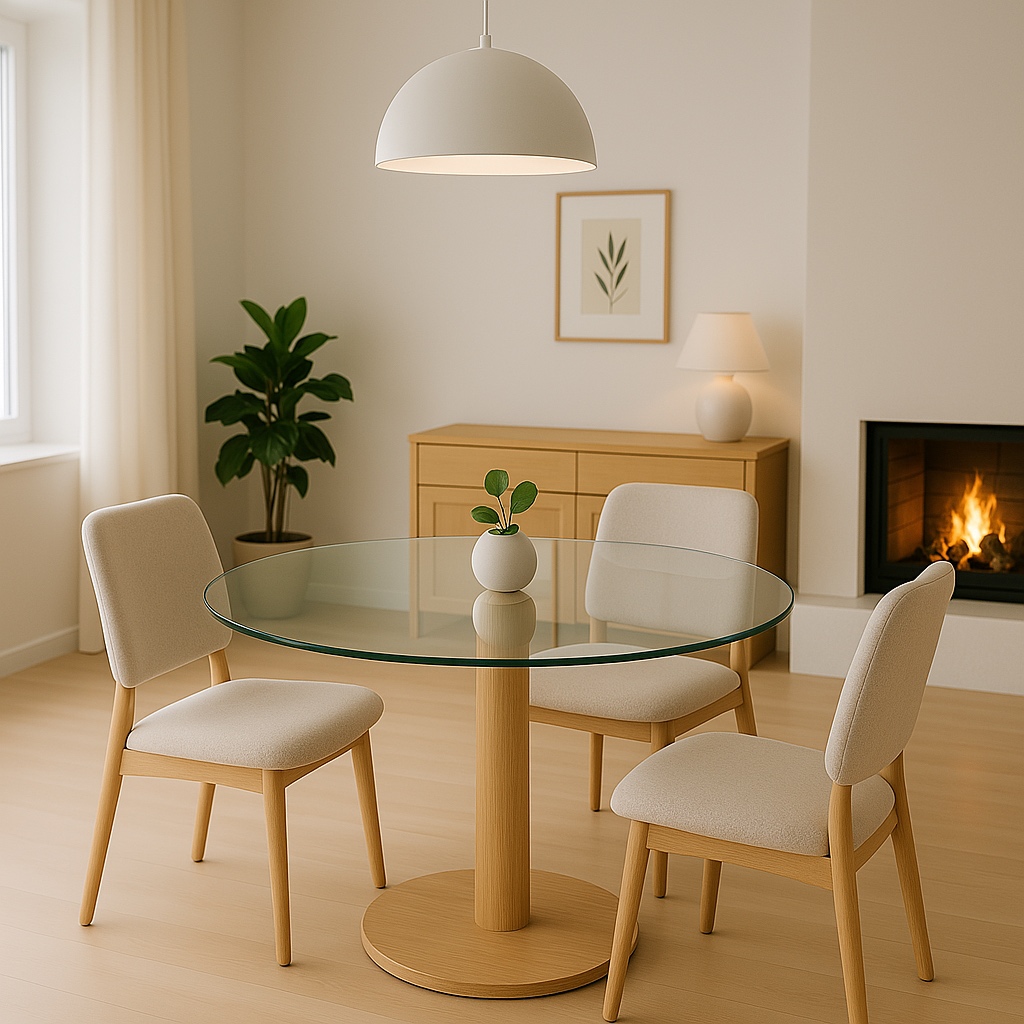
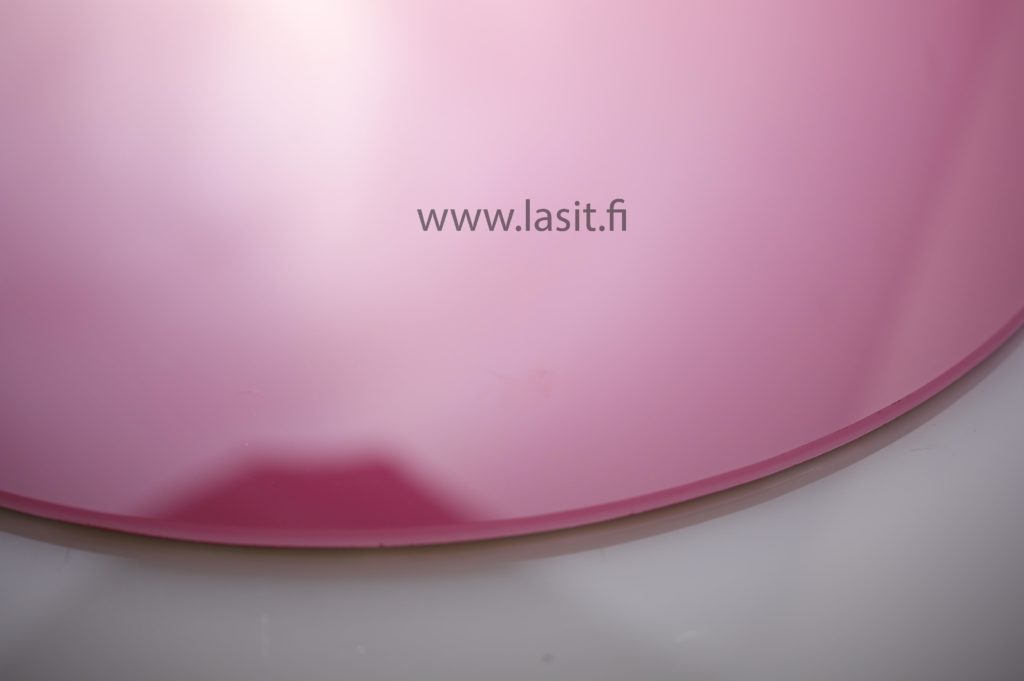
Which type of glass is best for a tabletop?
The most common choice for a tabletop cover is 6 mm clear or low-iron glass. For larger surfaces, we recommend 8–10 mm, and for fully glass, load-bearing tables, even 8–19 mm thickness.
How do I measure the tabletop glass correctly?
Measure the exact dimensions of the tabletop and choose a glass of the same size or 1 mm smaller. For irregular shapes, you can send us a 1:1 cardboard template.
Can holes be drilled in the glass?
Yes, holes must be made before tempering. Hole positions are always measured from the edge to the center of the hole. Holes over 45 mm in diameter can be polished by machine – contact our customer service.
What's the difference between clear and low-iron glass?
Low-iron glass reproduces colors more purely and reduces green tint, especially on light backgrounds. The edges may still appear green on larger panels. Note that low-iron glass is not completely colorless.
Which edge finish should I choose?
The recommended option is polished edge, where the edges are straight-ground and polished to a clear shine. Other options include beveled edge and modern 45° chamfer for added visual effect.
Why choose tempered glass?
Tempered glass handles temperature changes and bending stress better. When broken, it crumbles into small granules and is a safe choice for everyday use.
What are the benefits of back-painted glass?
Back-painted glass offers a glossy colored surface and completely hides the table underneath. Use low-iron glass for clean color rendering – especially with white shades.
Is there a difference in appearance when painting black on clear vs. low-iron glass?
Not significantly. Black-painted glass looks nearly identical whether standard or low-iron glass is used. For this reason, low-iron is generally not necessary for black-painted glass. Only the edge glow might appear slightly lighter with low-iron glass, especially on small pieces.
Where can I buy a glass tabletop cover?
You can easily order a custom-made tabletop glass from our webshop at www.lasit.fi. MODERN GLASS SHOP – choose size, shape and finish, and we'll take care of the rest!
Does a glass tabletop cover get scratched over time?
Glass is far more scratch-resistant than plastic, but it's not completely immune. Over the years, dishes and objects sliding across the surface thousands of times can gradually leave faint marks – especially rough ceramic bottoms, which can be comparable to coarse sandpaper, or when tiny grains of sand or crumbs get trapped underneath. With coasters, placemats, and regular wiping, however, the glass stays in excellent condition for years. The whole purpose of the glass is to protect your table – it takes the wear so your tabletop stays flawless.
Glass or acrylic/plexiglass – which is better as a table cover?
Glass is significantly more scratch-resistant and durable than acrylic or plexiglass. Plastic surfaces often show visible scratches within days or weeks because the material is soft. Glass, on the other hand, withstands daily use for years. Glass also maintains its clarity and doesn't yellow over time like plastic can. For a table cover, glass is the clearly superior choice.