Description
Laminated glass (safety glass, VSG) made to measure
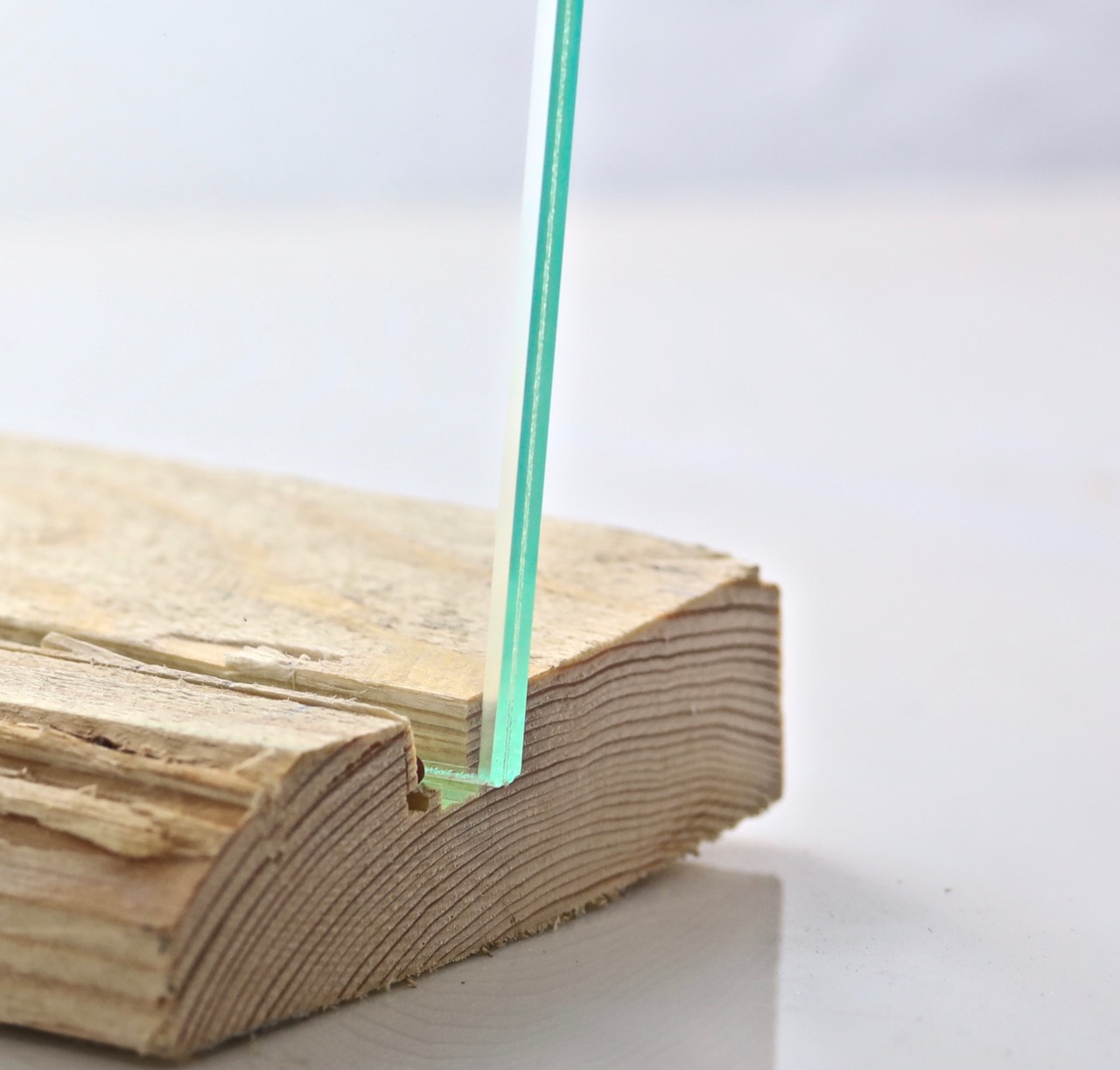
 What is laminated glass? Laminated glass is made by laminating two or more panes together with a PVB or EVA interlayer film. If the glass breaks, the film holds the fragments together, so broken laminated glass rarely causes a dangerous situation. This is why laminated glass is classified as safety glass (VSG).
Laminated glass is used for example as safety glass in doors and windows, as machinery glass and as sound insulation glass. The interlayer film sits between the panes; the maximum operating temperature of laminated glass is +80 °C.
Tempered laminated glass: The panes can be tempered before lamination – this produces tempered laminated safety glass. Tempered glass also withstands temperature differences within the pane far better (200 kelvin versus 40 kelvin for untempered glass), but the maximum operating temperature of the laminate remains +80 °C. The edges of tempered glass are always at least rough belt-ground, even if "Cut only, with sharp edges" is selected. For edges that remain visible we recommend polished edge grinding.
Note: In all glass construction, take into account building regulations and their requirements for the load-bearing capacity and durability of glass.
Sound insulation and dB values
The interlayer film dampens sound effectively – laminated glass is therefore also a good sound insulation glass. The thicker the panes and the more their thicknesses differ, the better the insulation. For demanding projects, special Sound Control acoustic laminates are also available – ask our customer service.
Comparison table of sound insulation values for different glass types (in Finnish):
dB Rw = ääneneristävyys vapaalla mittausalueella. dB Rw C = painotettu keskitaajuuksiseen ääneen (esim. puhe). dB Rw Ctr = painotettu matalataajuuksiseen ääneen (esim. liikennemelu).
Arvot ovat suuntaa-antavia (simuloitu Lasi Nygård käyttämillä lasilaaduilla).
| Lasityyppi | Paksuus | dB Rw | dB Rw C | dB Rw Ctr |
|---|---|---|---|---|
| Kirkas 3mm | 3mm | 28 | 27 | 24 |
| Kirkas 4mm | 4mm | 29 | 27 | 26 |
| Kirkas 5mm | 5mm | 30 | 29 | 28 |
| Kirkas 6mm | 6mm | 31 | 29 | 28 |
| Kirkas 8mm | 8mm | 32 | 30 | 29 |
| Kirkas 10mm | 10mm | 33 | 31 | 30 |
| Kirkas 12mm | 12mm | 34 | 33 | 32 |
| Laminoitu 33.1 | 6.38mm | 32 | 31 | 29 |
| Laminoitu 44.2 | 8.76mm | 33 | 32 | 30 |
| Laminoitu 55.2 | 10.76mm | 34 | 33 | 31 |
| Laminoitu 66.2 | 12.76mm | 36 | 35 | 34 |
| Laminoitu 88.2 | 16.76mm | 39 | 38 | 36 |
| Laminoitu 1010.2 | 20.76mm | 40 | 39 | 37 |
| Laminoitu 33.2 (Sound Control) | 6.76mm | 36 | 35 | 31 |
| Laminoitu 44.2 (Sound Control) | 8.76mm | 38 | 37 | 34 |
| Laminoitu 55.2 (Sound Control) | 10.76mm | 39 | 38 | 36 |
| Laminoitu 66.2 (Sound Control) | 12.76mm | 40 | 39 | 37 |
| Laminoitu 88.2 (Sound Control) | 16.76mm | 41 | 41 | 39 |
| Laminoitu 1010.2 (Sound Control) | 20.76mm | 43 | 42 | 40 |
| Eristyslasi 2K (4/15/4) | 23mm | 31 | 29 | 26 |
| Eristyslasi 2K (6/15/6) | 27mm | 34 | 33 | 30 |
| Eristyslasi 2K laminoitu (3+3/15/3+3) | 27.76mm | 36 | 35 | 32 |
| Eristyslasi 2K laminoitu (4+4/15/4+4) | 31.76mm | 37 | 36 | 33 |
| Eristyslasi 3K (4/15/4/15/4) | 42mm | 32 | 31 | 28 |
| Eristyslasi 3K (6/15/6/15/6) | 48mm | 34 | 33 | 28 |
Edge Polishing and Finishing
If the glass edges will remain visible after installation, we recommend taking Polished Edge on the glass. The sharp edges of the glass are then ground smooth and polished to presentation quality.
Bevel specialty: If all corners of the glass are rounded with corner radiuses less than 11mm, the bevel is ground in a straight line and does not follow the corner radiuses. Otherwise, the bevel is ground with a CNC machine to follow the edge line of the glass including the radiuses.
Examples of Corner Radius Sizes
R or radius, what size circle part the corner radius is.
Everyday comparisons:
- LP record: Diameter ~300mm → Radius R=150mm
- CD: Diameter 120mm → Radius R=60mm
- 2 euro coin: Diameter ~25mm → Radius R=12.5mm
- 10 cent coin: Diameter ~20mm → Radius R=10mm
R1 - R2 (1-2mm)
Use: Only sharpness removal, barely round to the eye
Recommendation: When minimal rounding is desired but glass remains nearly rectangular
R3 - R5 (3-5mm)
Use: Small but clearly visible rounding
Recommendation: Table glass, shelves - most commonly used size
R10 - R20 (10-20mm)
Use: Clearly rounded corners
Recommendation: Hearth glass (min R10mm), interior glass, design elements
- For table glass we recommend at least R2-R3mm corner radius for safety
- For hearth glass minimum R10mm radiuses for front corners
- If glass goes into a frame, corner radius may not be necessary
Back-Painted Glass
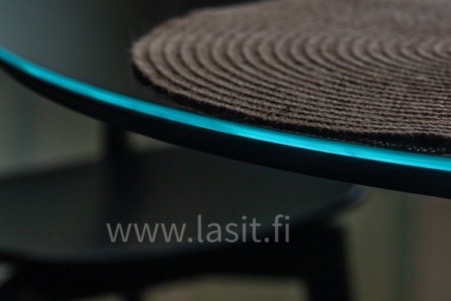
We can paint the back surface of the glass in your chosen color by order. Back-painted glass is suitable, for example, as a glass cover for dining tables, interior glass for walls or kitchen splashback glass, etc.
- Base glass: For back-painting we always recommend choosing "Extra Clear Glass" (optiwhite), which has only a little of the natural green tint of glass. Then the glass color reproduction properties are at their best.
- Color reproduction: Extra clear glass is not completely colorless and the glass also "shades" i.e. darkens the paint color shade slightly, so when viewed through the glass the color is never the same as the same paint shade without glass.
- Black color: Does not change much whether it is painted on normal or extra clear glass.
- Use: Back-painted glass is for indoor use only and the painted side must always be hidden against another surface (table, wall) and protected from scratches.
Comparison image: White painting on extra clear vs normal glass
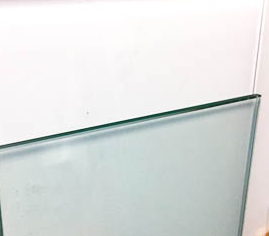
Left: Extra clear (optiwhite) glass - Right: Normal glass
Note the strong greenish tint of normal glass in white painting!
Color selection tips:
- White and light shades: ALWAYS use extra clear glass → Purer result
- Black shades: Normal glass is sufficient, difference is minimal
- Bright colors: Extra clear glass recommended → Colors shine better
- Dark colors: Normal glass works well
Patterns and ceramic digital printing on glass
Ceramic digital printing means a colour is printed onto the back of the glass and fired permanently into the surface during tempering at over 600 °C. It is the same technique you see in the black border of a car windscreen. You choose the printed pattern in the calculator: the most common is the edge fade print, a solid black band (RAL 9005) along the edge that fades inwards as a dot raster, with no hard boundary.
Which patterns can you choose?
The pattern name describes its most common purpose — every pattern can equally be used purely decoratively.
- Edge fade print. Conceals adhesive mounting or structures at the edge of the glass. Soft transition from the solid border to clear glass.
- Bird protection pattern. An evenly spaced dot pattern that makes the glass visible to birds and reduces collisions. Spacing below 100 mm is required for protection.
- Coverage (solar shading). An even dot raster across the whole glass. The coverage percentage determines how much light and visibility remain through the glass.
- Linear fade. A straight-line fade at the chosen angle: a solid area from which the pattern fades to clear glass. Common in shower and sauna glass.
- Safety markings. Horizontal bands at chosen heights from the bottom edge. Makes glass doors and walls noticeable in public spaces.
- Grid pattern. A printed grid window: you choose the number of panes and the spacing is derived from the glass size so the panes come out exactly equal. A flush surface with no protruding bars.
- Anti-slip stripes. Stripes at even intervals in the chosen angle. Used on glass floors, stairs and landings to improve grip.
Patterns can also be combined on the same pane – for example a bird protection pattern together with safety markings.
What is a printed edge used for?
- Hiding adhesive mounting. When glass is bonded with adhesive or tape, the solid band conceals the bond line so the surface looks clean and even.
- Concealing structures behind the glass. Frames, edges and backing surfaces disappear behind the printed area.
- Privacy with a soft transition. The fade screens the view without cutting the surface abruptly the way film does.
- UV protection for the bond. The solid band shields adhesives from direct sunlight.
Why ceramic colour?
The colour is not stuck onto the surface — it is fired into the glass. That makes it resistant to UV light, moisture, wear and cleaning agents, and suitable for both indoor and outdoor use. It cannot be scratched off and it does not fade, unlike wet paint or film.
What to note when ordering
- The glass must be tempered. The colour is fired in the same process as tempering, so the print is not possible without it.
- The print is on the back surface and is viewed through the glass. The calculator drawing shows the glass from the front.
- The edge fade print runs around the entire perimeter. You choose the width of the solid band and the fade zone in millimetres.
- Also available for laminated glass, provided it is tempered.
In the calculator, choose Patterning under "Patterning or back painting", add the patterns you want and set the dimensions with the sliders. The price updates immediately.
Drilling Holes in Glass
You can also order holes in glass at your desired location. There are certain regularities in glass about where holes can be drilled.
- Each glass thickness has its own minimum distances for how far the hole edge must be from, for example, the glass edge, glass corner or another hole
- If glass is tempered into safety glass, these distances are greater than in non-tempered glass
- Distances increase with glass thickness
- There is also a minimum for hole diameter depending on glass thickness
Technical information about holes:
- Edges: Holes are always raw-edged i.e. holes are intended to go "hidden"
- Size: 6-40mm holes are mainly made with diamond drill
- Large holes: Holes over 40mm are made either by drilling or machining with CNC machines
- No upper limit: We can machine almost any size hole in glass
- Edge holes: Holes can also be level with edges, i.e. make half-holes e.g. for cable feedthroughs or hearth glass against round fireplace
💡 Practical tips:
- Glass with holes is recommended to be tempered
- If possible, try to always use the same hole size (cheaper)
- Tempered glass CANNOT be drilled afterwards - all holes must be made before tempering!
- Plan hole locations carefully - measure accurately!
Large-Batch and Project Manufacturing for Glass Professionals
Are you a glass professional, construction company or designer? We have the expertise to deliver even the most demanding projects. If our price calculator doesn't cover the shape, size or structure you need, contact us – we manufacture glass to your drawings. Our production line is designed for both single pieces and hundreds of glasses in the same batch.
Who we serve:
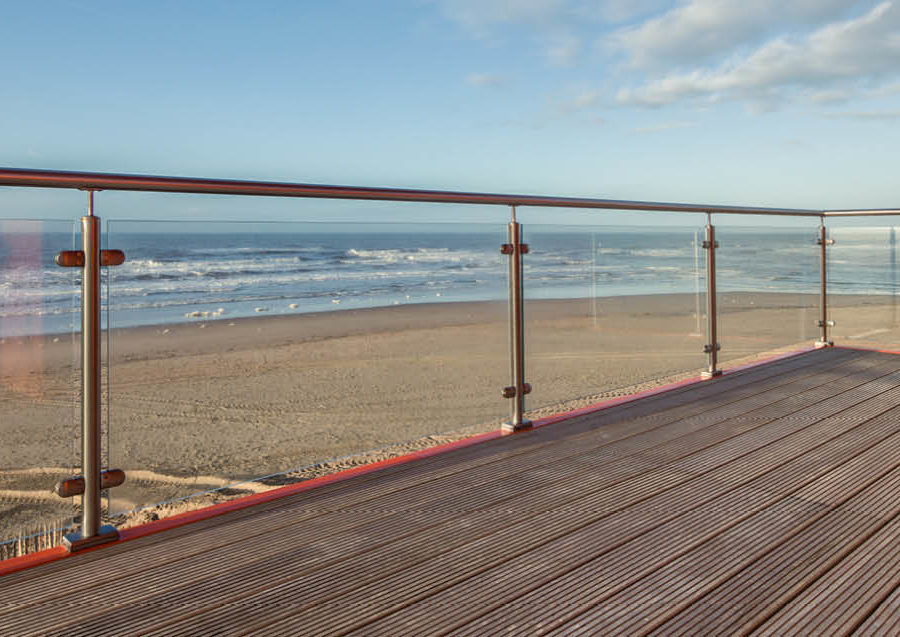
- Railing and staircase projects: Tempered laminated safety glass for railings and stairs – for construction companies and metal workshops, all glass for the project from the same batch.
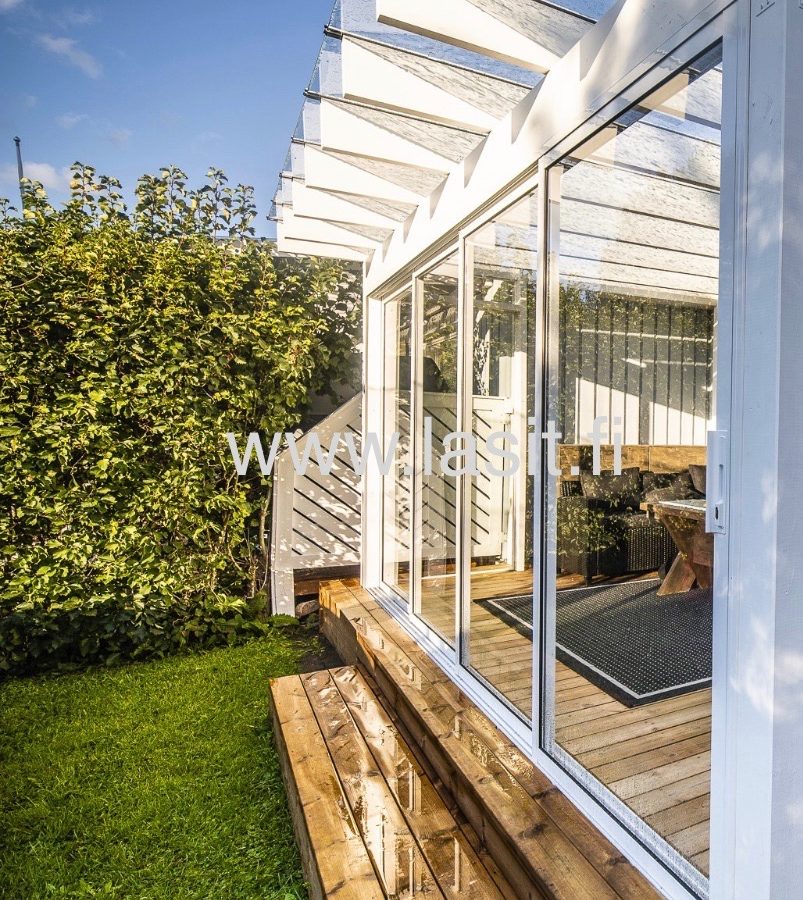
- Balcony glazing: Laminated glass for balcony railings and glazing, sized to your project.
- Marine and shipyard industry: Safety glass for cabins, railings and public areas in series production.
- Sound insulation projects: Sound Control laminates for offices, studios and traffic noise locations.
- Public and commercial spaces: Safety glazing for schools, kindergartens and shops – fall-through protection and personal safety.
Factory orders and large batches:
- Drawing or DXF file: Send your own drawing (hand-drawn, PDF or DXF/DWG) and we will manufacture the glass accordingly.
- Sample piece or template: You can also send us an old glass or a cardboard template, and we will manufacture the new one to match.
- Quote for large batches: For larger batches we price separately – request a quote and tell us the quantity, dimensions and finishing. All pieces are manufactured under precise process control, so the quality is consistent throughout the batch.
Why us? We are a glass processor, not a reseller. All cutting, CNC milling and shaping, drilling, grinding and bevelling is done in our own production. This means fast delivery, competitive pricing and flexibility in special orders. Feel free to contact us – we are happy to tell you more.
Frequently Asked Questions
What is laminated glass?
Laminated glass consists of two or more glass panes laminated together with an interlayer film (PVB, EVA, or SentryGlass). If the glass breaks, the glass remains attached to the laminating film. Our stock cut-to-size (non-tempered) glass is standard PVB laminated glass. You can ask about other options from our customer service.
How does laminated glass differ from tempered glass and regular glass?
Regular (non-tempered) glass breaks into sharp, cutting large shards. Tempered glass crumbles into small granules. In laminated glass, two or more glass panes are laminated together with an interlayer film. If one glass pane in laminated glass cracks or breaks, the fragments remain attached to the laminating film and the glass retains partial load-bearing capacity (but requires immediate inspection and possible replacement).
Glass can also be tempered before lamination—this creates tempered laminated glass, which combines the benefits of both: the high strength of tempering and the safety of lamination. It should be noted that if both glass panes in tempered laminated glass break simultaneously, load-bearing capacity is lost immediately and the glass must be replaced immediately. In non-tempered laminated glass, if both panes crack, load-bearing capacity is lost but the glass may remain together without collapsing, because the large shards remain attached to the film. Such glass must never be used—it must be replaced immediately.
What are typical uses for laminated glass?
Railing glass, overhead glazing, balcony partitions, stair railings, floor glass (often 3-layer laminated glass), shop windows, and other applications where the safety properties of laminated glass are required. Tempered laminated glass is mandatory for railings and overhead installations.
What is the difference between PVB, EVA, and SentryGlass interlayers?
PVB (standard): Our stock product, suitable for indoor use. Not recommended for outdoor use without edge protection and ventilation due to moisture absorption.
EVA: Much better for outdoor use, more water-resistant (not 100% but significantly better). Request a quote from customer service.
SentryGlass: The strongest option, five times stronger than PVB. Excellent outdoor resistance.
Can PVB laminated glass be used outdoors?
PVB film is not suitable for outdoor use in its standard form unless edges are protected and ventilated. PVB can absorb moisture, leading to delamination. For outdoor applications, we recommend EVA lamination—request a quote from our customer service.
Is railing glass safe?
Yes—correctly dimensioned and professionally installed railing glass is extremely safe! Safety requires, however, that:
1. The correct glass type is used: Railing glass must always be tempered laminated glass (2025 regulations)
2. Glass thickness is correctly dimensioned: Thickness is selected based on span, loads, and fixing method (see "How do I choose the right thickness for railing glass?")
3. Tested fixings are used: All clamps and profiles must have official CE markings and test reports (see "Does it matter which clamps or profiles I use to fix railing glass?")
4. Overall design: The fixing frame, screws, and base must also be dimensioned to withstand loads
For critical installations, we always recommend consulting a structural engineer. When these factors are in order, glass railing is completely safe and also a stunning visual solution!
Why must railing glass always be tempered laminated glass?
According to 2025 building recommendations and regulations, railing glass must always be tempered laminated glass. Previously, non-tempered laminated glass was also used for railings, but the latest calculations and recommendations show that in order for the glass to withstand the required point loads, line loads, wind loads, and other service loads, the glass must be tempered laminated glass. This ensures the glass can withstand impacts and, if broken, does not fall out of the frame, providing maximum safety. The glass thickness is selected based on span and loads.
Can railing glass be just a single tempered glass without lamination?
ABSOLUTELY NOT, if it is a proper railing glass with a fall height from one level to another. If tempered glass breaks, it immediately crumbles into small granules and falls out completely, which means the safety and fall protection provided by the railing is completely lost. This creates an immediate life-threatening danger.
Exception: A glass railing where there is no fall height at all from one level to another can be just tempered glass. These include, for example, windbreaks in private homes or decorative/privacy railings where the levels are at the same height and there is no risk of falling (e.g., a windbreak at the edge of a terrace where the terrace level continues on both sides of the railing at the same level). Even in these cases, the glass must withstand all required loads (wind load, point load, etc.), and dimensioning must be done carefully.
What is the basis for laminated glass strength design?
Laminated glass strength design is ALWAYS based on the principle that a single individual glass pane must withstand all required loads (point load, line load, wind load, etc.) completely independently. The second glass pane acts as a backup glass, which only takes the loads if the first glass breaks.
CRITICAL ERROR: If laminated glass is incorrectly dimensioned based on the combined thickness and combined resistance (e.g., thinking that 2×6 mm = 12 mm total glass), the consequences are catastrophic. When the first glass breaks, all loads are immediately transferred to the second glass, which alone cannot withstand the loads—it breaks immediately after. Result: both glass panes break almost simultaneously, load-bearing capacity is completely lost, and safety is compromised. This is why laminated glass design must ALWAYS be based on the principle that a single pane withstands the full loads, and the second pane is additional safety.
How do I choose the right thickness for railing glass?
Glass thickness depends on three main factors: span (distance between fixing points), loads (point load, line load, wind load), and fixing method. IMPORTANT: Each case must be calculated individually!
Absolute minimums depending on fixing method:
Fixed on one side (e.g., railing glass base rail fixing or glass clamps on only one edge): Absolute minimum is 8+8 mm tempered laminated. One-side fixed glass acts as a strong lever arm, which creates large bending moments in the glass, so a stronger thickness is mandatory.
Fixed on two sides (fixed at the ends): Note that glass height has a significant effect on glass deflection! A lower glass deflects more easily than a tall glass, even if the span between fixing points remains the same. Generally, it is recommended that glass fixed on two sides should be at least 800 mm high or higher due to improved technical strength of the glass. However, always take into account building regulations regarding railing height and glass side clearances (i.e., how much empty space may be left around the glass, objects that can pass through, etc.)—check with building control.
Fixed on four sides (e.g., framed railing): Absolute minimum can be 4+4 mm or 5+5 mm tempered laminated. With four support points, loads are distributed more evenly, so thinner glass may be sufficient.
Railing glass typically ranges from 4+4 mm to 15+15 mm tempered laminated glass depending on strength requirements.
Thickness is selected by calculating span, loads, and fixing conditions. Never guess—incorrectly dimensioned glass can break in use. We always recommend consulting a structural engineer.
What should be considered when installing railing glass?
The entire system must be designed carefully: glass type, glass thickness, fixing method, clamping depth, and the frame, screws, and all fasteners must withstand point loads, line loads, and wind loads.
CRITICAL NOTE - Overall Design: Even thick glass won't help if the structure fails elsewhere! Examples of dangerous situations:
• Concrete breaks underneath because fixing point loads were not calculated correctly
• Wrong type of fixing screw rusts through over time outdoors
• Thin deck board to which the railing is attached tears away from railing forces
• Fixing profile is too weak and cannot withstand loads
The entire chain from mounting base to glass is only as strong as its weakest link. Correct glass dimensioning is useless if the fixing structure fails. Consider overall design—every part is equally important! For critical installations, we always recommend consulting a structural engineer.
Why must railing glass edges be polished even if hidden?
Edge polishing (ground or polished edge) is mandatory for railing glass and other load-bearing structures for structural reasons. Unpolished edges contain microscopic cracks, and sharp edges are weak points. Under load (wind, point load, temperature), these microcracks can grow and lead to glass failure. Polished edges remove these microcracks and ensure full glass strength. This is a critical safety requirement—even if the edges are completely hidden in the mounting profile.
Can laminated glass be used as overhead glazing (anti-fall protection)?
Yes, but it requires precise engineering. The following must be calculated and verified: glass type, glass thickness, fixing method, clamping depth, and that the frame, screws, and all fasteners can withstand point loads, line loads, wind loads, and snow loads.
In heated buildings or public spaces, overhead glazing must use laminated glass. For heat treatment, it is recommended to use heat strengthened glass or, in some cases, fully tempered glass. The final glass type and thicknesses are determined by a structural engineer by calculating loads and conditions.
How is laminated glass cut and processed?
If laminated glass is not tempered, it can be cut and processed at any time with specialized tools. Cutting laminated glass is a demanding and precise procedure: the glass is cut from both sides at the same location, each cut is snapped before cutting the next side, then the laminating film is melted open with an electric resistance heater, cut, and separated.
If laminated glass is tempered, it cannot be processed in any way after tempering. All holes, cuts, and edge finishing must be done BEFORE tempering and lamination.
Should laminated glass be tempered if it has holes?
Yes, it is HIGHLY recommended! Individual glass panes in laminated glass are usually thin, and they easily crack at the hole location if the glass is not tempered. Non-tempered glass cannot withstand the twisting or compression forces around the hole—the glass easily cracks from the hole during use.
In very rare cases, a hole can be made in non-tempered laminated glass, but this is an exception, not a recommendation. Generally: if laminated glass has holes, the glass panes should be tempered before lamination. This ensures the glass's durability and safety.
Where can I order tempered laminated glass?
You can order tempered laminated glass from our webshop at www.lasit.fi. Select BOTH tempering AND lamination in the configurator, as well as shape, quantity, edge finishing, and other required features. For EVA lamination or special projects, contact our customer service for a quote.
Does it matter which clamps or profiles I use to fix railing glass?
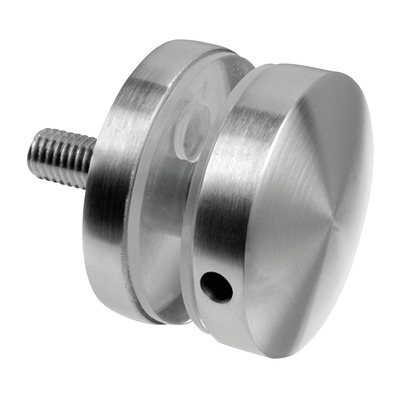
Yes—and this is a critical safety issue! Railing glass can be fixed in several ways: clamping glass clamps, point fixings, floor-mounted base rails, or U-profiles. Every clamp and profile must be tested and certified specifically for railing glass use.
DANGER: Wrong products on the market
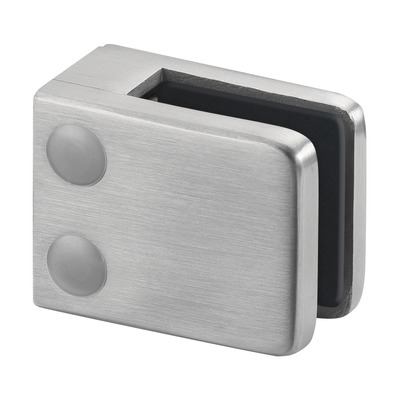
Online and in stores, you often see very similar-looking products (such as clamping glass clamps) with huge price differences. Why? One clamp may look exactly the same in photos but is actually only thumb-tip sized and lacks test reports (and wasn't even originally intended for railing glass), while another is palm-sized and has proper CE markings and load tests. Some products are designed only for windbreak use or display case dust protection—not to protect people from falling!
Real-life examples of dangerous situations:
Example 1: For instance, in one concert hall auditorium, a base rail+glass combination was found that was rated for only 50 kg load (residential use)—being used to protect massive crowds from falling! This is life-threatening.
Example 2: A customer brought us broken glass pieces as a sample and asked us to make a new "railing glass" to replace the broken one—a child had bumped into the railing, the glass had cracked and fallen out of its fixings from the upper floor to the ground floor. When we examined and assembled the old glass pieces, we discovered that the glass was 2500 mm long, thin regular laminated glass, fixed at the ends with some clamps found online that had only a 15 mm clamping area. Not a single part of this package was even theoretically strong enough...and the list goes on.
Often it's a matter of ignorance, sometimes also negligence—the cheapest possible option that doesn't even meet regulations is installed in a contracted project, "as long as it's laminated glass".
What you must do:
• Demand official test reports and CE markings from all railing glass accessories
• Verify that the product's performance values (load-bearing capacity) are sufficient for your specific application
• Don't trust a seller's word that "no one has ever fallen through these"—demand documents
• Always use a structural engineer for railing design
• Be especially careful with products imported from outside the EU—the market has many untested products that don't meet requirements
✓ Properly designed glass railing is extremely safe!
Correctly dimensioned and professionally installed railing glass is a 100% safe solution that you can be completely confident about. Additionally, glass railing is a visually stunning choice—modern, airy, and bright solution that brings a sense of space and elegance. Glass railing increases property value and creates a unique atmosphere in both indoor and outdoor spaces.
Invest in quality, safety, and beauty—glass railing is a decision you'll enjoy for decades!




Reviews
There are no reviews yet.