Description
Insulating Glass - Custom Made to Your Measurements
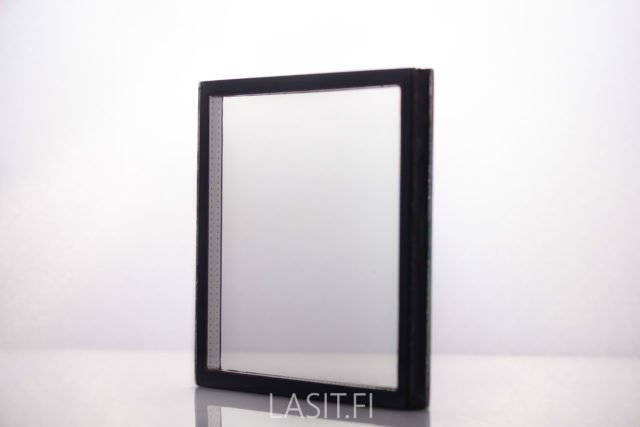
Insulating glass (also known as thermal glass, IGU, double glazing, triple glazing, energy-saving glass) is a hermetically sealed glass element where 2 or 3 glass panes are joined together. Between the panes there is a spacer bar (aluminium or composite) that separates the panes at a specific distance and contains a moisture-absorbing molecular sieve.
Insulating glass usually also features selective (low-E) glass and argon gas fill to improve thermal insulation (U-value). Modern insulating glass insulates heat many times more effectively than old single-pane or early double-pane windows.
Insulating glass is the heart of the window structure - it is the glass element itself, which is installed into a window frame or existing window structure. Insulating glass does not include the frame, sash or other window components. From us you order the ready-made glass elements, which you then fit into your existing window structure or a new frame.
We manufacture insulating glass custom-made to your measurements - select glass thicknesses, glass types, spacer widths and additional options from the configurator below.
U-value and Energy Savings
When choosing insulating glass, the most important performance value is the U-value (W/m²K), which indicates how much heat passes through the glass. The lower the U-value, the better the thermal insulation.
Factors affecting the U-value:
- Number of glass layers - triple glazing insulates better than double glazing
- Selective (low-E) glass - metallic coating reflects heat radiation back
- Gas fill - argon insulates approximately 30% better than air
- Cavity width - optimal width is 15-20 mm
- Spacer material - composite spacer (warm edge) insulates the edge area better than aluminium
Practical example: The U-value indicates heat loss in watts per square metre for each degree of temperature difference. When it is -30 °C outside and +20 °C inside, the temperature difference is 50 degrees:
- Old single-pane window (U ≈ 5.0): 5.0 × 50 = 250 W/m²
- Double glazing with selective + argon (U ≈ 1.0): 1.0 × 50 = 50 W/m²
- Triple glazing with selective + argon (U ≈ 0.6): 0.6 × 50 = 30 W/m²
A good U-value pays for itself in two ways: the direct energy saving is obvious, but in addition the inner surface of the glass stays warmer, so cold air does not flow down the window surface causing a draught sensation. When the draught feeling is reduced, you do not need to keep the indoor temperature as high to compensate - and every degree lower in room temperature saves additional energy.
The U-value is measured at the centre of the glass according to the standard (Ug) and does not take into account the spacer bar type - even though in reality the spacer material has a significant effect on the overall thermal insulation of the insulating glass. This is particularly important for small insulating glass units, where the spacer bar matters enormously because a small glass is practically almost entirely "edge area", where the spacer has a direct impact.
You can see the U-value of the selected glass in the additional information below the glass options.
Double vs Triple Glazing
Insulating glass is manufactured either as double glazed (2-pane) or triple glazed (3-pane). Triple glazing is the standard in modern construction, but double glazing may be sufficient in certain applications.
| Property | Double Glazing | Triple Glazing |
|---|---|---|
| U-value (low-E + argon) | ~1.0-1.1 W/m²K | ~0.6-1.0 W/m²K |
| U-value (clear, no low-E) | ~2.8 W/m²K | ~1.8-2.0 W/m²K |
| Total thickness (typical) | ~24-28 mm | ~36-48 mm |
| Weight (with 4mm panes) | ~20 kg/m² | ~30 kg/m² |
| Sound insulation | ~31 dB | ~32 dB |
| Typical use | 2+1 structure (IGU + separate storm glass), old windows (thin frame depth), warehouses, halls, interior walls | Residential buildings, new builds, energy-efficient applications |
When double glazing is sufficient: Double glazing is an excellent choice for the 2+1 structure, where the window has an insulating glass unit plus a separate storm glass (single pane). This is a very common and popular solution in residential construction - the double glazed IGU handles thermal insulation while the separate storm glass provides additional insulation and improved sound insulation. Double glazing also suits replacing old windows with thin frames, as well as warehouses, halls, and interior walls.
When triple glazing is recommended: When the window does not have a separate storm glass, triple glazing is the best choice - it achieves the required U-value on its own. A 3+1 structure (triple glazed IGU + separate storm glass) is also an excellent combination, achieving top-class thermal insulation and sound insulation.
Selective Glass (Low-E)
Selective glass (low-E glass) is standard glass coated with an extremely thin, virtually colourless metallic alloy. This coating reflects heat radiation from inside back into the room, while allowing solar heat radiation of slightly different wavelengths to pass through the window well.
The selective coating is always positioned on the inside of the insulating glass unit, where it is protected between two panes. Modern selective coatings are nearly colourless and cause minimal colour change to the insulating glass.
Almost all new insulating glass features selective glass and argon gas between the panes. Selective glass improves the U-value significantly: for example, in double glazing, the U-value drops from ~2.8 W/m²K (clear glass) to approximately ~1.0-1.1 W/m²K with selective glass.
Solar Control Selective Glass
Solar control selective glass (double selective) effectively reflects both solar heat radiation back outside and interior heat radiation back inside. We offer the state-of-the-art Pilkington SunCool 70/40 solar control selective glass for this purpose.
SunCool 70/40 features:
- Neutral appearance - not heavily tinted like traditional solar control glass
- Light transmission approximately 70% - lets light in well
- Solar energy transmission - approximately 40% in triple glazing, 43% in double glazing (without solar control approximately 72-82%)
With Pilkington SunCool 70/40, you get modern insulating glass that reduces heating costs in winter and cooling/air conditioning energy consumption in summer. Warm in winter and cool in summer!
Sunscreen Glass
Standard sunscreen glasses only reduce solar heat radiation entering from outside, but do not affect heat escaping from inside. Sunscreen glasses are always either heavily tinted or highly reflective (or both).
Mass-tinted glass:
- Colour options: grey, bronze, blue, green
- Solar energy transmission approximately 50% depending on thickness
- Always recommended to be tempered due to potential thermal breakage risk
Reflective glass:
- E.g. SuperSilver, SilverLight
- Solar energy transmission approximately 19-29%
- Stronger tinting and reflection
With both glass types, light transmission drops proportionally with solar energy transmission. Standard sunscreen glass should always be combined with selective glass as the innermost pane to reduce heat loss.
Difference from solar control selective glass: Mass-tinted and reflective sunscreen glasses block solar energy more aggressively, but noticeably change the appearance of the glass (colour tint or mirror reflection) and reduce light transmission accordingly. Solar control selective glass (e.g. SunCool 70/40) is a more modern and subtle solution - it blocks solar energy effectively while maintaining a neutral appearance and good light transmission, and also insulates against heat escaping from inside. If you do not need strong tinting or mirror reflection, solar control selective glass is usually the best choice. Stronger solar control selective glasses are also available - if you cannot find a suitable option in the configurator, ask our customer service!
Self-cleaning Glass
Self-cleaning glass provides convenience by significantly reducing the number of times the glass needs to be cleaned. However, self-cleaning glass does not completely eliminate the need for cleaning.
Self-cleaning glass only works:
- Outdoors
- In a location where the self-cleaning coating receives plenty of:
- UV radiation from the sun - UV activates the coating and breaks down biodegradable dirt on the glass
- Rainwater - which rinses away the dirt broken down by the coating (or alternatively, hose watering)
The self-cleaning coating also repels water, allowing water to run off the glass surface more quickly without leaving droplet marks as easily.
Ask our customer service for more information about self-cleaning glass!
Spacer Bars and Warm Edge
The spacer bar between the glass panes in insulating glass separates them at a specific distance and contains a moisture-absorbing molecular sieve. The spacer material significantly affects the thermal insulation of the insulating glass edge area.
Aluminium spacer (traditional):
- Affordable and common option
- Aluminium conducts heat well, so the glass edge area is colder
- Edge area coldness can cause condensation on the inner surface of the window at the edges
Composite spacer (warm edge):
- Composite material insulates the edge area significantly better than aluminium
- Significantly reduces the risk of edge area condensation
- Improves the thermal insulation of the insulating glass edge area
- Best thermal value achieved with a 20 mm wide composite spacer
- Recommended especially for residential construction and energy-efficient applications
Safety Glass in Insulating Glass
All panes in insulating glass can be tempered or laminated to improve safety.
Tempered insulating glass:
- After tempering, glass is approximately 3-5 times more durable than untempered glass (excluding the glass edge area)
- When broken, tempered glass shatters into small granules, minimising the risk of cuts
- Better resistance to temperature differences across different parts of the glass (200 kelvin difference within the glass, individual pane max operating temperature +300°C, untempered 40 kelvin)
- When tempering is selected, all 2 or 3 panes of the insulating glass are tempered
Laminated insulating glass:
- Laminated glass has two panes bonded together with a PVB or EVA laminating film
- If the glass breaks, the film holds the glass fragments together
- Laminated glass is classified as safety glass
- Maximum operating temperature for laminated glass is +80°C
Note: The maximum operating temperature of insulating glass as a unit is +65°C, as the sealant may begin to deteriorate at higher temperatures.
When is tempering recommended?
- Tinted and body-coloured glass - heats up significantly in sunlight, creating thermal stress between different parts of the glass. Tempering is always recommended.
- Solar selective glass - absorbs part of the solar energy and heats up more than standard glass. Tempering is recommended.
- Locations with shadow patterns - if structures in front of the glass (fire escape ladders, pillars, eaves etc.) cast shadows on part of the glass in sunlight, the shaded and sunlit areas heat unevenly. This thermal imbalance can crack untempered glass.
Note: Tempered glass does not protect against falling - when broken it crumbles into small granules and does not hold together. For fall-risk locations, use laminated glass.
When is lamination recommended?
- Sound insulation - the laminating film effectively dampens sound. The best option for a quieter home.
- UV protection - the laminating film partially filters UV radiation from sunlight, reducing fading of furniture and materials.
- Burglar resistance - laminated glass slightly slows down break-in attempts, as the film holds the fragments together making it harder to create an opening. Official multi-layer burglar-resistant glass is also available - contact our customer service for more information!
When is laminated glass required by building regulations?
- Fall-risk locations - where a person could fall through the glass, laminated glass is mandatory. Tempered glass is not sufficient as it crumbles into small granules and does not prevent falling. Laminated glass reasonably holds together when broken, slowing down fall-through as the film holds the fragments together. Typical locations: glass railings, balcony glazing, overhead glazing above occupied areas.
When is safety glass (tempered or laminated) required by building regulations?
In Finland, safety glass (tempered or laminated) is required in situations including:
- Public spaces: when the lower edge of the glass is less than 1500 mm from floor level, or when the glass is less than 300 mm from a door opening
- Private spaces (homes): when the lower edge of the glass is less than 700 mm from floor level
- Doors: in private spaces always when the lower edge of the glass is less than 1500 mm from floor level
Important: Always check the current building regulations and consult the structural designer of your project - regulations may change and additional requirements may apply to your specific situation.
Tempered + laminated combination: The panes of insulating glass can also be tempered and laminated simultaneously (so-called toughened laminated glass), providing both the impact resistance of tempering and the fall protection of lamination. This combination cannot be ordered directly from our online configurator - contact our customer service for more information!
Example Recommendations
Best configuration for top-class insulation and solar energy management:
- 3-layer (triple glazed insulating glass)
- Pilkington SunCool 70/40 solar control selective glass as the outermost pane
- 4 or 6 mm selective glass as the innermost pane
- Composite spacer, best thermal value with 20 mm wide spacer
This combination offers:
- Excellent thermal insulation against heat escaping from inside (reduces heating energy demand)
- Solar thermal insulation against solar energy from outside (reduces cooling/air conditioning demand)
- Neutral appearance (no strong colours or reflections)
Want free solar energy inside (e.g. passive solar heating)? Select "Clear Standard" as the outermost pane for maximum solar energy transmission.
Sound Insulation
Insulating glass attenuates sound thanks to its basic structure - two or three glass layers and the air/gas cavities between them act as sound barriers. A typical double glazed unit (4 mm glass / 15 mm cavity / 4 mm glass) attenuates approximately 31 dB, and triple glazing approximately 32 dB.
Sound insulation can be improved by:
- Thicker glass - thicker panes attenuate more sound
- Different thickness panes - e.g. 6 mm + 4 mm prevents resonance better than 4 mm + 4 mm
- Laminated panes in insulating glass - the laminating film attenuates sound effectively, e.g. double glazing with laminated panes (3+3 mm / 15 mm / 3+3 mm) achieves approximately 36 dB
- Sound Control acoustic glass in insulating glass - insulating glass can also be made with special Sound Control laminated acoustic glass, designed specifically for sound attenuation. Contact our customer service for more information!
Below is a comparison table of sound insulation values for different glass types:
dB Rw = ääneneristävyys vapaalla mittausalueella. dB Rw C = painotettu keskitaajuuksiseen ääneen (esim. puhe). dB Rw Ctr = painotettu matalataajuuksiseen ääneen (esim. liikennemelu).
Arvot ovat suuntaa-antavia (simuloitu Lasi Nygård käyttämillä lasilaaduilla).
| Lasityyppi | Paksuus | dB Rw | dB Rw C | dB Rw Ctr |
|---|---|---|---|---|
| Kirkas 3mm | 3mm | 28 | 27 | 24 |
| Kirkas 4mm | 4mm | 29 | 27 | 26 |
| Kirkas 5mm | 5mm | 30 | 29 | 28 |
| Kirkas 6mm | 6mm | 31 | 29 | 28 |
| Kirkas 8mm | 8mm | 32 | 30 | 29 |
| Kirkas 10mm | 10mm | 33 | 31 | 30 |
| Kirkas 12mm | 12mm | 34 | 33 | 32 |
| Laminoitu 33.1 | 6.38mm | 32 | 31 | 29 |
| Laminoitu 44.2 | 8.76mm | 33 | 32 | 30 |
| Laminoitu 55.2 | 10.76mm | 34 | 33 | 31 |
| Laminoitu 66.2 | 12.76mm | 36 | 35 | 34 |
| Laminoitu 88.2 | 16.76mm | 39 | 38 | 36 |
| Laminoitu 1010.2 | 20.76mm | 40 | 39 | 37 |
| Laminoitu 33.2 (Sound Control) | 6.76mm | 36 | 35 | 31 |
| Laminoitu 44.2 (Sound Control) | 8.76mm | 38 | 37 | 34 |
| Laminoitu 55.2 (Sound Control) | 10.76mm | 39 | 38 | 36 |
| Laminoitu 66.2 (Sound Control) | 12.76mm | 40 | 39 | 37 |
| Laminoitu 88.2 (Sound Control) | 16.76mm | 41 | 41 | 39 |
| Laminoitu 1010.2 (Sound Control) | 20.76mm | 43 | 42 | 40 |
| Eristyslasi 2K (4/15/4) | 23mm | 31 | 29 | 26 |
| Eristyslasi 2K (6/15/6) | 27mm | 34 | 33 | 30 |
| Eristyslasi 2K laminoitu (3+3/15/3+3) | 27.76mm | 36 | 35 | 32 |
| Eristyslasi 2K laminoitu (4+4/15/4+4) | 31.76mm | 37 | 36 | 33 |
| Eristyslasi 3K (4/15/4/15/4) | 42mm | 32 | 31 | 28 |
| Eristyslasi 3K (6/15/6/15/6) | 48mm | 34 | 33 | 28 |
Applications
Insulating glass is widely used in various applications:
- Building windows and doors - the most common application
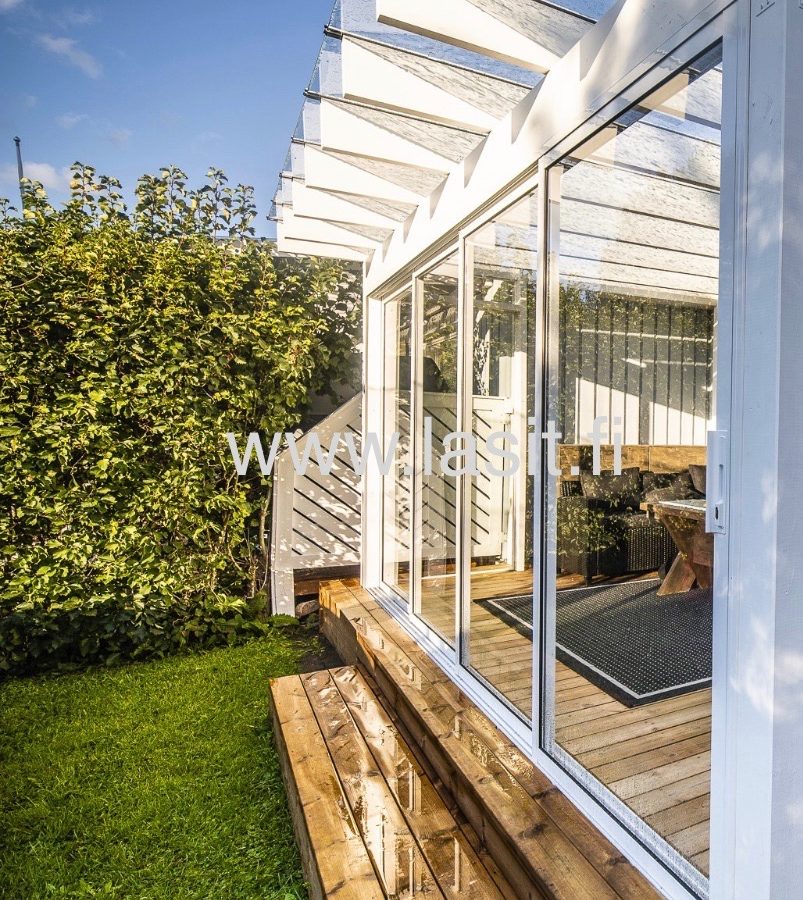
- Terrace and porch glazing - thermal insulation and comfort
- Replacing old windows - a new insulating glass unit in an old window frame significantly improves energy efficiency. Double glazing often fits old thin frames where thicker triple glazing does not fit.
- Facade glazing - commercial buildings and public spaces
- Cold rooms and special applications - excellent insulation with triple glazing
Building regulations: In all glass construction, building regulations and their requirements for glass durability and safety glass must be taken into account.
Condensation
Window condensation is a common phenomenon whose cause and severity depend on where on the glass it occurs.
Interior surface condensation (room-side surface):
- Caused by excessive indoor humidity relative to the glass surface temperature
- Most common during cold weather when the inner glass surface cools down
- A better U-value (triple glazing, selective glass, composite spacer) keeps the inner surface warmer and reduces condensation
- Adequate ventilation removes moisture and prevents the problem
- Composite spacer particularly reduces edge area condensation
Exterior surface condensation (outside surface):
- A normal and harmless phenomenon that indicates the insulating glass is working well
- Typically occurs in spring and autumn on clear nights, when the outer pane cools by radiating heat to the night sky below the outdoor air temperature (dew point)
- The better the U-value, the more likely exterior condensation will occur - it means the glass insulates well and does not let interior heat reach the outer pane
- Condensation disappears on its own as the sun rises
- Exterior condensation is by no means a fault - on the contrary, it is a sign that the insulating glass is working exactly as it should and insulating heat effectively
Condensation between panes (inside the insulating glass unit):
- If the fogging is permanent, it is a sign of failure - the hermetic seal of the insulating glass has failed, moisture enters between the panes, weakening insulation performance and causing permanent fogging. In this case, the insulating glass unit must be replaced.
- Sometimes during manufacturing, a small amount of moisture remains between the panes, which the molecular sieve in the spacer bar absorbs. Under certain conditions, this moisture can temporarily evaporate back and appear as light fogging between the panes. This is not a sign of a leak - the fogging disappears when conditions change.
Ordering and Measurement Guide
Ordering a new insulating glass to replace an old one:
- Remove the window trims around the old insulating glass
- Measure the exact outer dimensions (width and height) of the insulating glass
- Measure the total thickness of the insulating glass
- Check whether the current glass is double or triple glazed - the number of panes can be seen by shining a torch on the glass surface: each pane reflects two lights. If any reflection has a distinctly bluish or violet tint, it is possibly a selective (low-E) coated glass.
- It is also recommended to lift the glass out enough to measure the individual pane thicknesses and spacer bar widths. From the edge of the insulating glass you can also see whether any of the panes are laminated. Also check whether the old panes were tempered - tempered glass has a tempering stamp in one of the corners.
When ordering for a new installation:
- Provide the outer dimensions of the insulating glass in millimetres
- Ensure sufficient installation clearance in the frame (typically 2-4 mm on each side, more for larger metre-class windows)
- Note that the black sealant edge area must be covered (by strips or frame)
Weight calculator: You can calculate the glass weight using the configurator. The weight calculator calculates the weight of a rectangular area and does not account for mass reduction due to glass shape. Glass weight may vary between production batches due to thickness tolerance.
If you have any questions, please do not hesitate to contact us - we are happy to help!
Installation, Handling and Storage
Installation clearance: Sufficient clearance must be left between the insulating glass and the frame, typically 2-4 mm on each side. Larger metre-class windows require greater clearance.
Sealant and UV protection: The black sealant area (polysulphide) of insulating glass is typically about 12 mm wide, but varies by manufacturer (range approximately 8-13 mm). The sealant area must be protected from UV radiation - the window fixing strips must cover the black edge area.
Edge of insulating glass - do not use chemicals! Never apply any silicones, adhesives or other chemicals to the edge of the insulating glass (the polysulphide sealant). They will chemically react with the polysulphide over time and damage the seal of the insulating glass. Silicones and sealants must always be applied between the glass and the structure - never on the edge of the insulating glass.
Fixing strips and sealing: A metal fixing strip must always have a seal/gasket between the strip and the glass. With plastic or wooden strips, a seal is not strictly necessary. Instead of a seal, you can also use glazing silicone, which seals and lightly bonds the glass in place. Remember: silicone always between the glass and the structure, never on the edge of the insulating glass.
Setting blocks: Insulating glass must never rest directly on the structure. Setting blocks (wedges) made of non-rotting, glass-friendly soft material such as plastic must always be placed under the glass. Setting blocks also make it easy to centre the glass in the glazing opening.
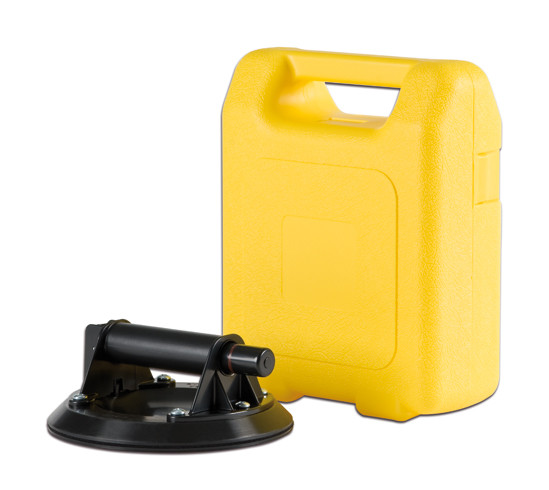
Handling: Insulating glass units are heavy and the edges can be sharp. Full protective clothing must be worn when handling - pay particular attention to the risk of cuts from sharp edges and the risk of injury from the glass falling or breaking. Mandatory protective equipment: cut-resistant gloves, safety footwear, full-length cut-resistant trousers, full cut-resistant sleeves, safety glasses and a helmet. Always ensure personal and material safety in all handling, lifting and installation situations - the handler is responsible for adequate protection and safe working practices. Use suction cups or assistance when needed.
Storage: Store insulating glass upright in a dry, temperature-stable location. Protect the glass completely from sunlight. Never leave insulating glass partially covered by a tarpaulin or cover in the sun - the black sealant area heats up much more than the clear glass area, and the resulting temperature difference can cause the glass to crack from thermal shock. Make sure the glass is either fully covered or entirely in the shade.
Cleaning: Clean the glass surfaces of insulating glass with ordinary glass cleaner and a soft cloth. Avoid abrasive cleaning agents and tools. Do not apply cleaning agents to the edge of the insulating glass (the polysulphide sealant).
Large-Batch and Project Manufacturing for Glass Professionals
Are you a glass professional, construction company or designer? We have the expertise to deliver even the most demanding projects. If our price calculator doesn't cover the shape, size or structure you need, contact us – we manufacture glass to your drawings. Our production line is designed for both single pieces and hundreds of glasses in the same batch.
Who we serve:
- Window renovation and construction companies: Insulated glass units delivered straight to the site – all units for the project in one order.
- Window factories and joineries: Units for your own window production in series, consistent quality batch after batch.
- Property maintenance and management: Replacement of broken units – made to measure for the existing frame.
- Cabin and house builders: Units for new builds and extensions, including special glass (selective, solar control, safety glass).
- Series orders with identical dimensions: From tens to hundreds of units – all under precise process control, consistent quality throughout the batch.
Factory orders and large batches:
- Drawing or DXF file: Send your own drawing (hand-drawn, PDF or DXF/DWG) and we will manufacture the glass accordingly.
- Sample piece or template: You can also send us an old glass or a cardboard template, and we will manufacture the new one to match.
- Quote for large batches: For larger batches we price separately – request a quote and tell us the quantity, dimensions and finishing. All pieces are manufactured under precise process control, so the quality is consistent throughout the batch.
Why us? We are a glass processor, not a reseller. All cutting, CNC milling and shaping, drilling, grinding and bevelling is done in our own production. This means fast delivery, competitive pricing and flexibility in special orders. Feel free to contact us – we are happy to tell you more.
What is the difference between insulating glass and thermal glass?
Insulating glass and thermal glass refer to the same product - a hermetically sealed glass element where 2 or 3 glass panes are joined together with a spacer bar. Other common names include IGU (insulated glass unit), sealed unit, double glazing, triple glazing, and energy-saving glass. All these terms refer to the same product. Note: sometimes the term 'sealed unit' or 'vacuum glass' may refer to actual vacuum glass, which is an entirely different product. Vacuum glass is next-generation technology where a vacuum exists between two glass panes instead of air or gas - this enables an extremely thin structure and excellent U-value. Vacuum glass is only just beginning to enter the market.
Does insulating glass come as a complete window?
No - insulating glass is the glass element itself, the heart of the window structure, not a complete window. Insulating glass does not include the frame, sash or other window components. From us you order the ready-made glass elements to your measurements, and fit them yourself into your existing window structure, old frame or new frame.
What is U-value and why is it important?
The U-value (W/m²K) indicates how much heat passes through the glass per square metre for each degree of temperature difference. For example, when it is -30 °C outside and +20 °C inside (50 degree difference): an old single pane (U ≈ 5.0) loses 250 W/m², double glazing with selective+argon (U ≈ 1.0) only 50 W/m², and triple glazing with selective+argon (U ≈ 0.6) only 30 W/m². A good U-value pays for itself in two ways: besides the direct energy saving, the inner glass surface stays warmer, reducing the draught sensation so you do not need to keep the indoor temperature as high to compensate.
What does argon gas fill mean?
The normal air between the glass panes in insulating glass is replaced with argon. Argon is a colourless, odourless and non-toxic noble gas that insulates heat approximately 30% better than ordinary air, which is why it significantly improves the U-value of insulating glass. Argon is very common - in almost all modern insulating glass the air between the panes has been replaced with argon.
What is selective coating (low-E glass)?
Selective (low-E) glass has an extremely thin, nearly invisible metallic alloy coating on its surface. This coating reflects room heat radiation back inside while allowing sunlight to pass through well. The selective coating is always positioned on the inside of the insulating glass unit for protection. Modern selective coatings are virtually colourless and do not change the appearance of the glass.
What is solar control selective glass (SunCool)?
Solar control selective glass, such as Pilkington SunCool 70/40, is a double selective glass that reflects both escaping interior heat back inside and solar heat radiation back outside. It allows light through well (approximately 70%) while solar energy transmission in triple glazing is only approximately 40%. The appearance is neutral without strong tints or reflections.
Does insulating glass fit in an old window?
Yes! Replacing insulating glass in an old window frame is a common renovation measure that significantly improves energy efficiency. The most important thing is to accurately measure the outer dimensions and total thickness of the old insulating glass. Double glazing often fits in old thin frames where thicker triple glazing does not fit. We recommend removing the trims and measuring carefully before ordering.
Can the panes of insulating glass be tempered?
Yes! By tempering all panes in the insulating glass, the glass becomes approximately 3-5 times more durable than untempered glass. Tempered glass also withstands temperature differences better. When broken, tempered glass crumbles into small granules, which is safer than the sharp shards of untempered glass.
When is tempering of insulating glass strongly recommended?
Tempering is strongly recommended whenever the glass is exposed to thermal stress: tinted and body-coloured glass heats up significantly in sunlight, solar selective glass absorbs part of the solar energy, and shadow patterns on the glass (fire escape ladders, pillars, eaves etc.) cause thermal imbalance that can crack untempered glass. Always check current building regulations and consult a structural designer.
When must laminated glass be used in insulating glass?
Laminated glass is mandatory in fall-risk locations - tempered glass is not sufficient as it when broken crumbles into small granules and does not prevent falling. Laminated glass reasonably holds together when broken, slowing down fall-through. Lamination is also recommended for better sound insulation (the laminating film effectively dampens sound), partial UV protection, or to slightly slow down break-in attempts (official burglar-resistant glass is also available).
When is safety glass (tempered or laminated) required?
Building regulations require safety glass (tempered or laminated) in public spaces when the lower edge of the glass is less than 1500 mm from floor level or less than 300 mm from a door opening, in homes when the lower edge is less than 700 mm from floor level, and in doors always when less than 1500 mm from floor level. In fall-risk locations tempered glass alone is not sufficient - laminated glass is required. Always check current building regulations and consult a structural designer.
What is the maximum temperature for insulating glass?
The maximum operating temperature of insulating glass as a unit is +65°C, as the hermetic sealant may begin to deteriorate at higher temperatures. Insulating glass is not suitable for saunas or other very hot environments.
Can insulating glass be used in a sauna?
This is a question we are asked frequently. Although window manufacturers produce insulating glass windows for saunas, insulating glass has no warranty when used in a sauna. The maximum operating temperature of insulating glass is +65 °C, and at high temperatures the sealant can begin to deteriorate at the edges and the butyl seal can flow onto the inner glass surface. If you want to use an insulating glass element in a sauna, it should preferably be tempered insulating glass due to thermal shock - however, there is still no warranty for sauna use, and tempering does not prevent sealant degradation. That said, there are cases where ordinary small insulating glass has lasted decades in a sauna without major issues and even without tempering. However, the likelihood is that at some point it will start to leak or the glass may crack from thermal shock. If you absolutely want to make a sauna window from insulating glass elements, we recommend using an oversized rebate depth so that the sealant area is well hidden inside the wood and does not heat up first. As a rule, insulating glass has no warranty for sauna use.
Why does the window fog up (condensation)?
Interior surface condensation is caused by excessive indoor humidity relative to the glass surface temperature. A better U-value keeps the inner surface warmer and reduces the problem. Exterior surface condensation is a normal phenomenon indicating the glass insulates well. Permanent condensation between the panes indicates failure - the seal of the insulating glass has broken and the glass must be replaced. However, sometimes moisture remaining from the manufacturing process can temporarily evaporate from the molecular sieve under certain conditions, appearing as light fogging. This is not a leak and disappears when conditions change.
What size fixing strip is needed for insulating glass installation?
The fixing strip must be tall enough to cover the black sealant area (polysulphide, typically about 12 mm wide) and the installation clearance. With 2-4 mm clearance on each side, the minimum strip height is approximately 14 mm. The strip must also be structurally strong enough. A metal fixing strip must always have a seal/gasket between the strip and the glass, while with plastic or wooden strips a seal is not strictly necessary. Instead of a seal, you can also use glazing silicone, which seals and lightly "bonds" the glass in place. Please note that larger metre-class windows require a greater installation clearance on each side. Crucially important: silicone or sealant must always go between the glass and the structure - never on the edge of the insulating glass (the polysulphide sealant), as chemicals react with the polysulphide and will damage the seal of the insulating glass.
Does the black sealant area of insulating glass need to be fully covered?
Yes, the black polysulphide sealant should be covered. If only a couple of millimetres of sealant remains visible, the issue is mainly aesthetic - the sealant does not look attractive. If more sealant is left exposed, UV radiation from the sun will degrade it over time, compromising the seal of the insulating glass unit. If a couple of millimetres remain visible, you can apply a thin, neat bead of UV-protective surface silicone over it - this protects the sealant and gives a clean finish.
Can film, window tint or solar film be applied to insulating glass?
Absolutely not! The warranty on insulating glass is voided immediately if any type of film, tint or sticker is applied to the glass surface. Film changes the thermal behaviour of the glass - it absorbs solar radiation and heats the glass surface significantly more than normal. Glass naturally expands and contracts with temperature changes, but the film prevents this even movement. This creates uneven stresses and distortions between different parts of the glass - the film-covered area heats up and expands differently from the free edge area. This leads to the glass cracking from thermal stress. If you need solar protection, choose solar control glass, solar selective glass or body-tinted glass directly as the pane in the insulating glass - these are designed to withstand thermal loads as part of the insulating glass structure.




Reviews
There are no reviews yet.